

"Waterfront East Transit".
Governments come together to disappoint me.

I’m — to be clear — happy that the Waterfront East streetcar line in Toronto is being funded. After all, I was part of extended advocacy efforts to get it to happen, albeit with changes. But, that’s more or less where my happiness and excitement ends
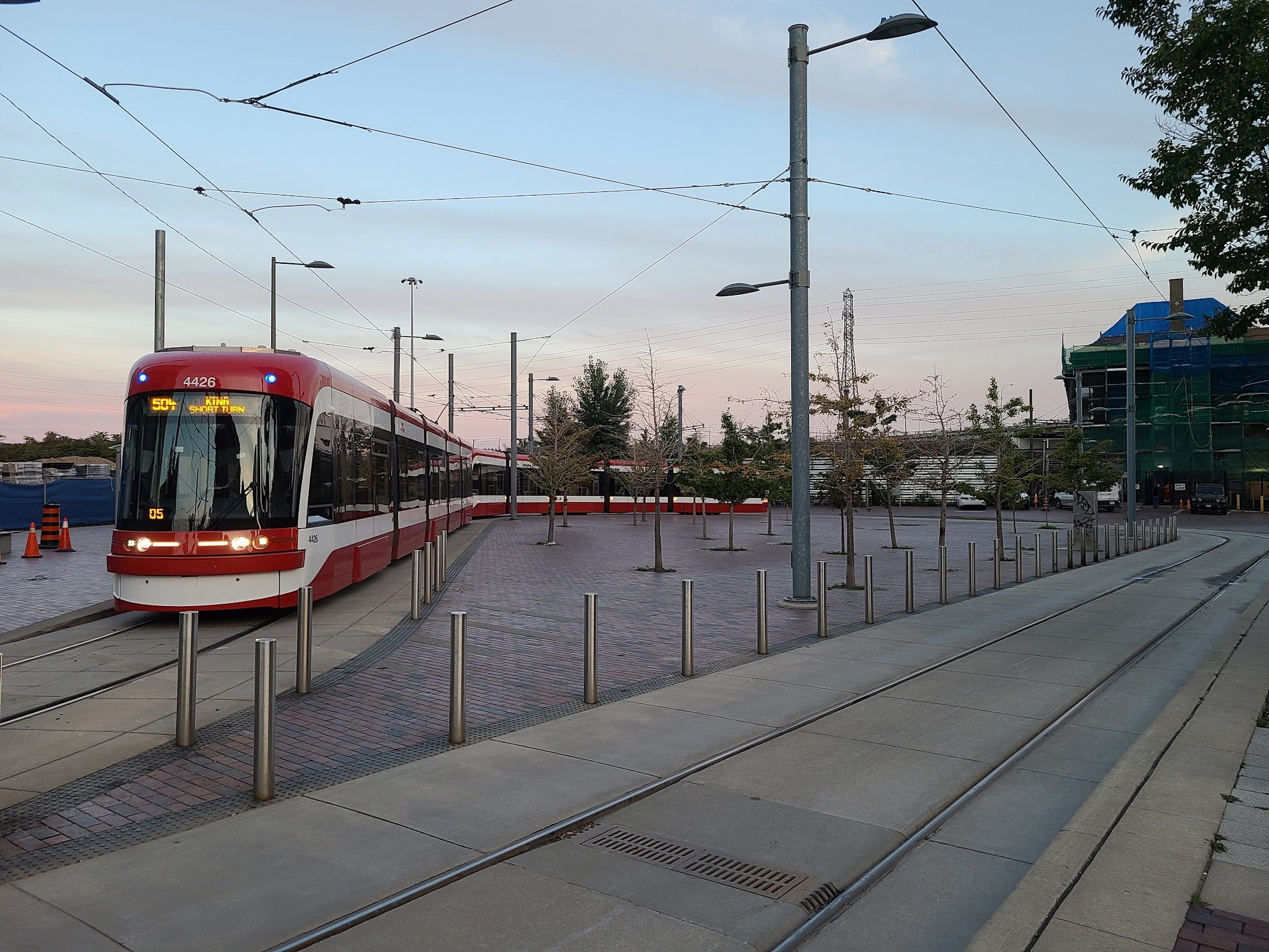
As part of a federal-provincial-municipal deal to unlock housing (as if you somehow can’t build housing without one of Toronto’s dysfunctional streetcars?), the three levels of government have each committed almost a billion dollars to fund what is in effect the mirror image to the 509 Harbourfront streetcar: A new route going from Union station south to Queens Quay and then east along the waterfront through and to new development areas. Doug Ford (who is the one with all the actual power to actually get housing built) clearly gets that this is a streetcar because everyone kept saying the words “Waterfront East Transit” instead of the usual language “Waterfront East LRT”, which is just another thoughtcrime in the Toronto doctrine that somehow LRT is a meaningful term and not just applied at will to whatever streetcar project is currently a priority.
People have asked me how I feel, and if you couldn't already tell, my feelings are quite mixed. I'm genuinely and earnestly quite happy that this project is going to be built because there really is a gap here, however as is so often the case, we are stumbling into doing the right thing (building new transit infrastructure for the eastern waterfront and Portland's) in the wrong way.
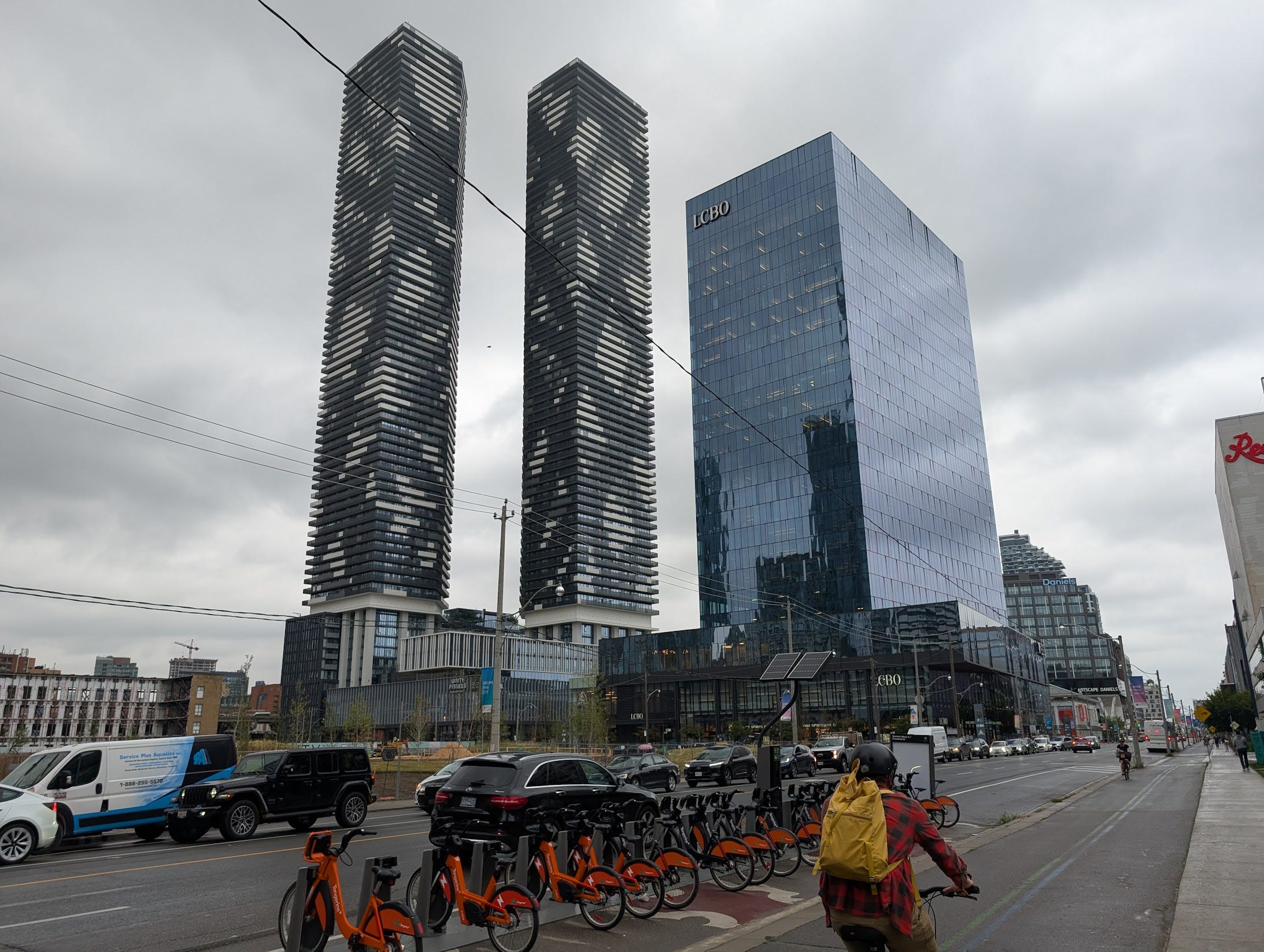
There is a genuinely enormous quantity of density particularly on the eastern waterfront (a pretty significant amount of density was planned for the Portlands but that seems likely to be cut back so that we can have a second major airport in Toronto with jet aircraft, which of course is much more important than more housing!) and it does make sense to provide mass transit infrastructure for this development.
But, I can’t help but notice that at the exact same time this “city priority” project is getting built, advocates have to ask nicely that the city and TTC get their act together and run the network they already have like they aren’t trying to actively sabotage it, by doing things like trying to make it fast and using technology from this century.
Putting aside my sass, what does this project actually consist of?
Well, starting out in the Portlands, it will include a new and fairly-large, around-the-block loop on Villiers Island, before traveling north off of the island on the dedicated streetcar bridge that was placed when the other bridges connecting the island were. There will then be a minor section of track going north under the rail corridor to connect to the Cherry Street streetcar tracks and likely replacing the loop there. There will also be a more substantial dedicated right-of-way traveling west on the south side of Queens Quay to connect with the existing streetcar infrastructure and tunnel at Bay Street. At the south end of the tunnel, there will be a wye with switches constructed, allowing movements either East-West along Queens Quay, or from Bay Street to either direction on Queens Quay. Finally, the Union station streetcar facility will be totally reimagined, getting rid of the curved platform along the loop and building four straight platforms, with bypass tracks sort of akin to an expanded version of what exists at Exhibition station, allowing different routes to serve dedicated platforms and potentially lay over without having to quickly leave the station. This expansion will also come along with new entrances the TTC station through CIBC Square and further south at Union station.
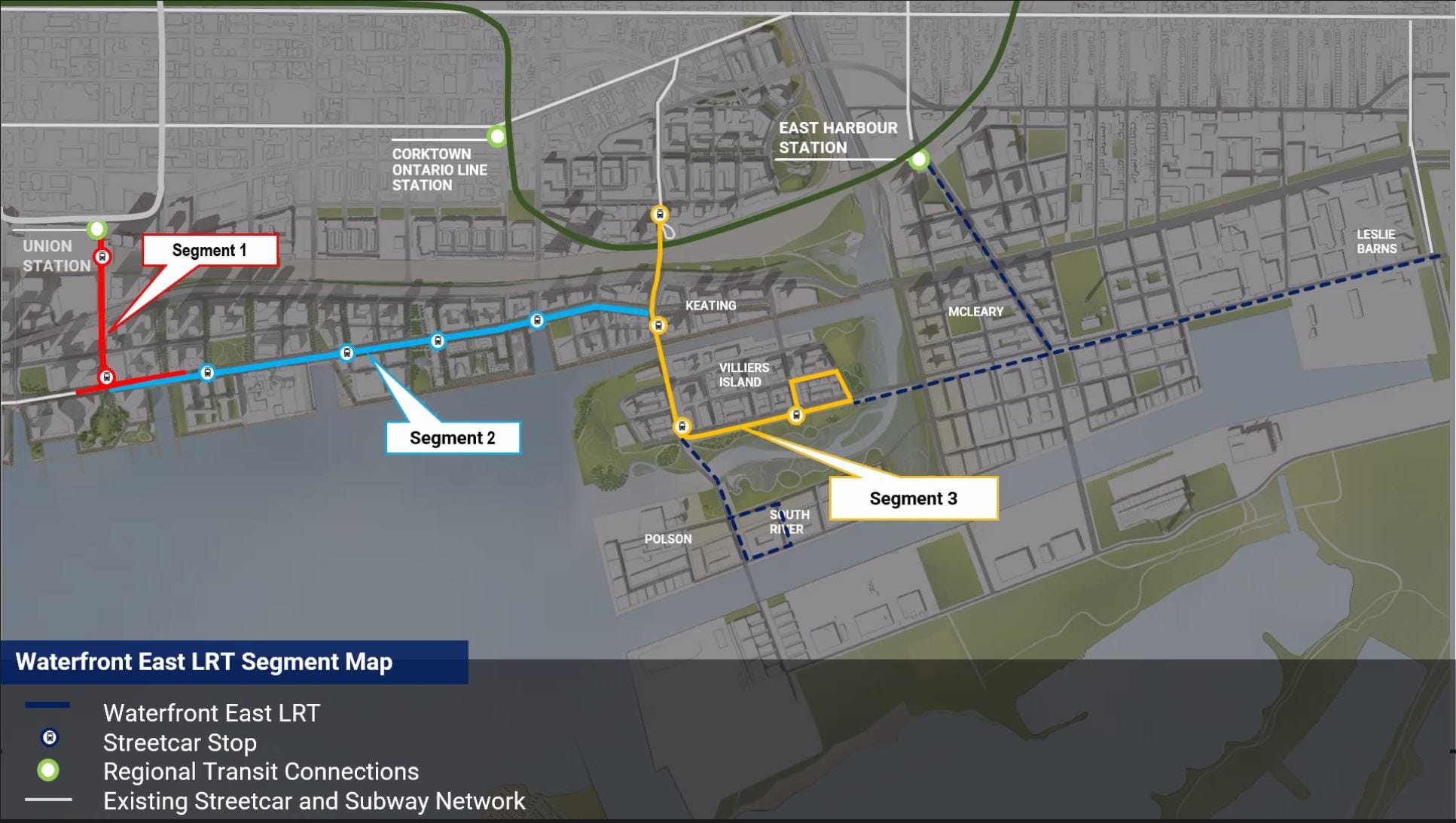
Using this new infrastructure, I would expect three new services, or really one new service and two realigned services. I assume that King streetcars currently running down Cherry Street will continue to the island to turn around, then I expect the Harbourfront streetcar route will be extended straight across the waterfront no longer running to Union station. Finally, I expect there to be a new service running from the island to Union Station.
Fortunately, it seems like we're getting at least the basics right: all the new stuff is going to be in dedicated right-of-way (except possibly the loop around the island), and there's even been talked about green track, which we've had some limited success with on the Eglinton line but which ought to be rolled out much more widely in the city given all the dedicated streetcar right-of-ways and the fact that we refuse to run buses on them anyways.
Unfortunately, we are doing oh-so-typical things wrong.
For one, the project is ludicrously expensive. We can talk all day about the underground expansion near Union station and the price still doesn't make a lick of sense. Of course that's exactly what makes so much sense, Toronto lacks cost discipline and so we get expensive projects. And what's so frustrating is that we don't get at least the nicest projects in the world despite spending the most money. This is doubly frustrating because we actually set aside the space for the streetcars in a number of different locations. I can imagine perhaps part of what's driving the cost is infrastructure that isn't really needed for the streetcar like street and utility upgrades and the like, but we probably will never really know because we don't believe in transparency in this country.
The natural follow-up question is, given we're spending so much, did we at least take this opportunity to modernize the standards we build streetcars to? As far as I can tell, unfortunately, no. It does seem like we might end up getting some green track — maybe, but other things that would have been good to see, like a subfleet of bidirectional streetcars that would simplify the terminus at the island, double-point switches, totally rethought stops, and wider curves that would require less maintenance and wear on the vehicles less seem unlikely, if not entirely guaranteed to not happen.
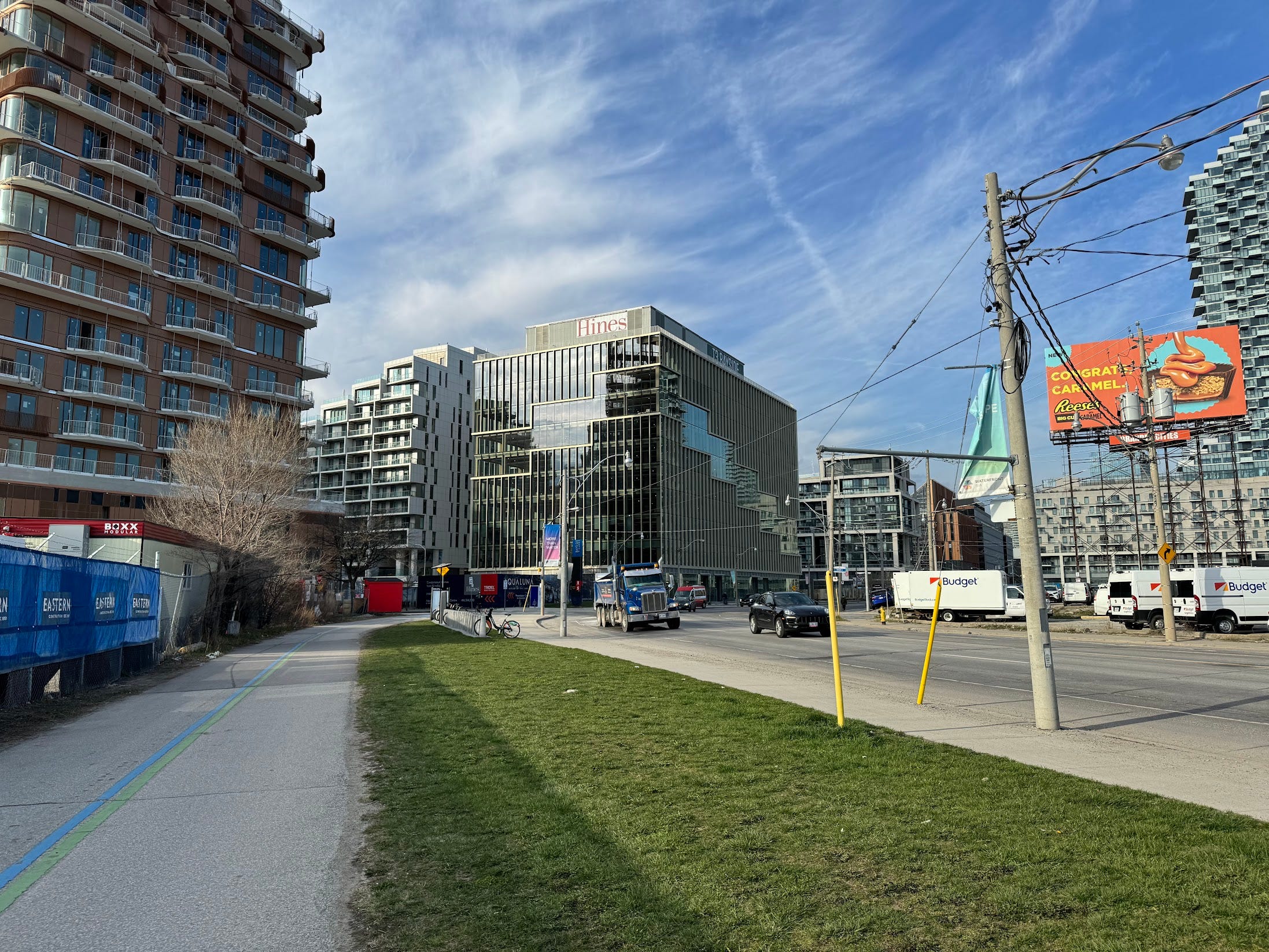
I'm obviously going to advocate with others as part of FastTrackTO (an advocacy group we spun up to help push to fix and perhaps in some cases enhance the streetcars) to do this stuff, but given it hasn't happened historically, I'm not very confident. This is of course frustrating, because a big expansion like this (relatively speaking) offers the opportunity to do things differently. I like to think of when Amsterdam built its new tram route to the islands built in the Ij and how, while compatible with the existing tram network, it incorporated new things like faster operations with a more rapid transit-like right-of-way, and coupled-up trams. I'm not exactly surprised that Toronto wasn't open to the Japanese way of doing waterfront transit, but I'm pretty disappointed that we couldn't even manage the Amsterdam way.
And of course, the planning doesn't feel all that integrated. While we set aside space for the streetcar along road right-of-ways, it's not exactly at the level of France where they might have designed the loop at the island (if it had to be a loop) to go through a development block and potentially under a structure, probably as part of a less car-centric road layout. We just cannot imagine transit and development not being separated like church and state.
Of course, the lack of integrated planning goes further. The Ontario Line is going to swoop past the area, however the new streetcar isn't going to connect to it despite overlapping with it at Cherry street! In part, that's Metrolinx's fault for not building an oh-so-obvious station at Cherry Street (which they could still build albeit in a less optimal way, and for greater cost), but it's also the city's fault for planning this thing to not connect to East Harbour from the start, which would let it connect with the Ontario Line and GO trains. This means that, in effect from a connectivity perspective, the Waterfront East LRT might as well just go straight south into the lake, since it will be hard for those from the east of the city and east of the city to easily access it without going all the way to Union station.
These integration problems are of course intertwined with cost disease. If not for the super high costs, we could build more trackage in the first phase of this project. I would personally like, for example, if we completed tracks down the Cherry Beach (streetcar to beach!), east to the Leslie Barns (redundancy!), and north to East Harbour along Broadview as part of this project; instead, people are going to have to fight for these extensions one by one, and maybe they will not happen.
The design of Union station also feels questionable: sure, if you assume nothing can change about the way we run the streetcar network or the way we design our infrastructure this is the only way, but given how much we're probably going to spend on this underground station I would have liked us to look at a few more options (and look at the more seriously) than we actually did. One friend mentions that given that CIBC Square didn't start construction all that long ago, we really should have considered having the streetcar tracks loop under the old GO bus terminal, potentially connecting with a stop to the new office complex, and then heading down Yonge Street, connecting with the absolutely gargantuan developments there. This would actually be a way of using a loop that would provide more connectivity and interesting operational opportunities, but we aren't even willing to consider slight modifications to the way we do things, so loops mostly have to immediately connect back to tracks going in the other direction as opposed to being wider (there are exceptions but they are not common). Other options would obviously be opened up, if we were willing to acquire double ended streetcars, which could be used on the new trackage as well as on routes connecting to Union station, which would probably allow at least a modest shrinking of the size of the Union terminal complex.
My point in all of this is, well this is a positive project, it is so typically Toronto, and despite costs continuing to escalate in perpetuity, we haven't seemingly decided to step up our own game, changing the way we operate legacy infrastructure and systems and taking advantage of situations like this to pivot the way we do things.
Basically, this is progress for Toronto, but it’s progress in the Toronto sense, fiddling at the margins instead of changing things which we really ought to change. And I wish we had a better story for why we were building it, and how we were planning it, instead of just “well, we put a streetcar in new Waterfront development areas!”.
The corruption goes deep, unfortunately. We have a wannabe dictator as premier whom Toronto doesn't vote for at all and yet seems to always end up as their pretend mayor. There is no actual democracy taking place here. Canadians do nothing but lay all blame on the Federal levels of government but when it comes to provincial elections, it's radio silence. And it's not hard to understand why. The other parties don't seem to even be trying!
It makes me wonder why we even need to have different levels of government at all in 2026. If everything is going to be managed in a top-down way, why do we need mayors or provinces?
We're stuck in a system where the provinces have all the power, the cities have all the problems, and the feds have all the blame.
The bit about "we will have to fight for those additions [connecting to Lesbia Barna, East Harbour, etc]" really speaks to me. This is precisely why I find Canadian processes exhausting; the only thing we can agree on, politically, is that cynacism is a law of nature and thus sophisticated discussions about the past and the future are never on the table.
The cost? You articulated it well. But, for me, it goes deeper. We can put a pricetag on what retrofitting the transit network will be (adding stops at Cherry and Garrison Point, creating Spadina RER station in 2058, etc), but how do you measure the cost of apathy? ...of a city that is so exhausted by blatant under-performance and/or corruption that they simply throw in the towel?
Maybe we're already there...