

The Next Step.
Updates.

Today, I’m really excited to announce some big changes, some major updates—and maybe even some updates to those changes.
Where I’m At.
Over a year ago, I started regularly posting on this blog again.
Honestly, I was unsure of what to call it and what exactly I’d be writing. I had a baby to take care of, so that was the least of my concerns. However, thanks to the CWELCC daycare program, I’ve had a lot more time in the last few months.
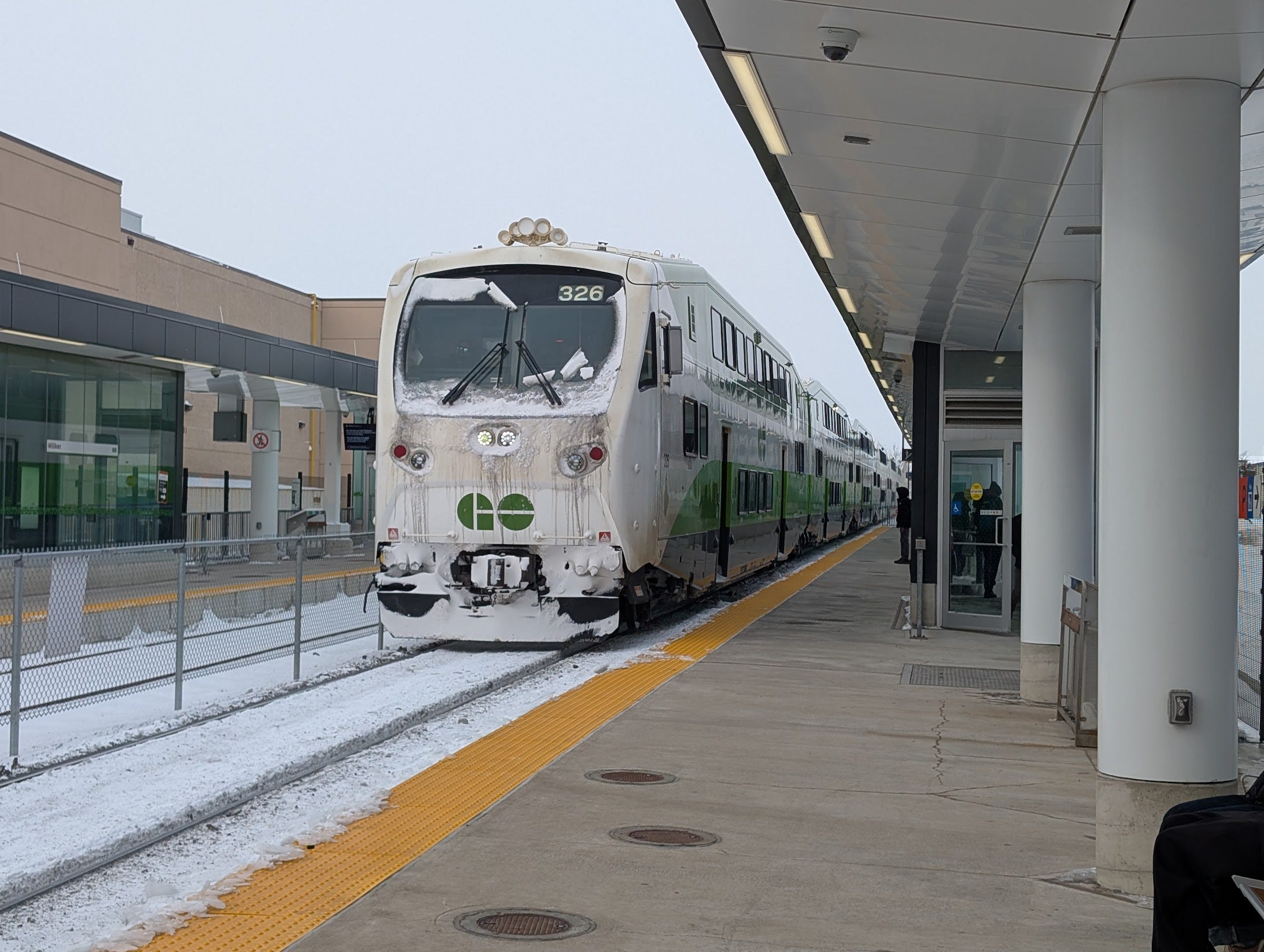
In that time, I’ve read a lot, listened to a lot, and thought a lot about what I care about and how I can best contribute. I love talking about public transport and cities, and I think I play an important role in it. I am not an engineer, and I’m not sure I have the answers to all the big problems of public transit, but I am quite confident in the questions.
Transit is critically important. One in ten Canadian commuters uses it to get to work, and that number is much higher in cities. Well over a million people in Toronto and Montreal — centres for much of our service-based economy — take transit every single day. Furthermore, with housing increasingly being constructed without parking, greater urbanization, and an aging population, more and more people will regularly need transit. Housing is just one of the many critical challenges we are facing as a country in which transit plays a big role. Others that come to mind include climate change and the environment, health, and productivity and economic growth.
What to do?
So then, this blog will have a new name and a refined mission, as well as an elevated look and operation. This is now The Transit Brief, and the goal is simple: be the source for news on public transport in Canada and beyond.

The focus will be Canada, but my hope is to provide something like a weekly or biweekly dive into international projects and examples. Of course, in evaluating what Canada is doing, I’ll frequently ask what other places are doing. The way I talk about public transport is inherently international.
While there are many things I could do, elucidating the details of infrastructure builds and transit operations is just something I am uniquely passionate about — and, dare I say, good at.
A big problem is that in the old media landscape, more cities had reporters who would have covered their transit systems. That is far less common now. What is worse is that even when we do have reporters, they get thrown onto a beat that they probably haven’t spent the last two decades thinking about, and may not even be interested in. Outsiders can be good, but it also makes it hard to get into the nitty-gritty.
It’s like dropping Grandma onto an ice rink and asking her to referee an NHL game.
And so, I think doubling down on helping everyone, but especially those with deep questions—like journalists, policymakers, and those in the industry—is the right call. Fundamentally, there are lots of people interested in digging tunnels and building infrastructure. But far fewer are asking where we should dig tunnels, if that infrastructure is the best use of scarce dollars, and why we couldn’t do it for less if we humbled ourselves to the South Koreans, Italians, or Chileans!
If you want to help me get the ball rolling on this project, sharing this post and suggesting people consider subscribing helps immensely.
The Build.
Creating something that I hope can be an institution that pushes Canada, and perhaps the world writ large, ahead on public transit means doing more. I’ve more or less written an article every week for the last several years, but this project means committing to more — and more in-depth — articles every week. Right now my cadence is weekly, but I’d love for it to be thrice weekly. I also think I can make my critiques (and periodic celebrations) more pointed and sophisticated.
I care about transit, but that means I think we need to be honest about the problems and when agencies and politicians are letting us down. This can create a weird dynamic. I have a lot of friends and acquaintances in this world, and there is a dynamic of car-centricity in Canada — even if less so than in the US — that means criticizing transit can seem a bit like punching down.
I, however, reject this interpretation. Transit wins when it is better than the alternative. That often means a faster and higher-capacity mode of transport than cars — which is dependent on planning and operations — and it also means better-executed projects, which depend on planning, engineering, and policy.
Not criticizing transit — insofar as there is anything we can do about it, which for most issues there is — is effectively accepting that things can’t or won’t get better. I do not accept this.
Now, part of writing more means being more timely. I will try to get articles out for most major domestic transit news events in short order, which can help people determine how they feel. My hope is to cover all the large Canadian cities — we currently have seven with rail transit, though that will increase to ten in the next decade — as well as relevant things going on in smaller centres.
While I am most intimately familiar with transit in Canada, I also have tons of knowledge of big international cities, as well as smaller centres where interesting stuff is happening. I hope to talk about these places regularly (think several times per month) to keep abreast of global transit developments, and of course, I always like to make comparisons to cities globally where I think it is relevant — especially because legacy media doesn’t seem able to do this.
I also want to improve my quality. I plan on putting a lot more effort into each piece, as well as doing more collaborations and adding more media to posts as well. I think you will notice the difference.
I have slightly grander aspirations as well. People have long asked for an audio version of posts they can listen to on commutes, and people also seem to really enjoy podcast-type content. This is something I want to do, although I would expect this around fall time, as I take time to get the setup and production right.
If you already subscribed to Next Metro, your subscription is seamlessly transferred over. A share is still helpful though!
If I want to make all these changes, I need to grow my base of both paid and unpaid subscribers — at least by a factor of two. That might sound lofty, but if everyone who read this became a subscriber, I would not be far off my goal. Free subscriptions help immensely, too! The reality is, that I can only do this to the extent people care, and want this to exist.
I’ll likely raise subscription prices at the end of summer, so if you want to lock in a permanently lower rate, consider moving sooner rather than later!
On the paid subscription side, if you care about this mission of an independent media operation covering transit in Canada, and just generally being a force for making these systems better, your support means a lot. If my writing brings you value by teaching you new things and keeping you up to date, maybe it is easily financially justified. And maybe if you are in the industry or helping to set policy, it can be an indispensable tool. Group subscriptions for everything from friend groups to advocacy organizations to companies are available, and discounts for bulk subscriptions can be discussed at: reece@thetransitbrief.net
If you just happen to really care about the mission or want to have a transformative impact on this project, you can consider a founding membership or even a direct donation. Founding members and donors can choose to have their names placed on the “About” page as supporters. Should things grow large enough, I might even consider hiring people, but that is off in the future.
Keeping abreast of the transit networks across all of Canada’s big cities takes a lot of time and commitment. The Transit Brief lives and dies by your support. To receive new posts and support my work, consider becoming a free or paid subscriber.
Thank you.
Made with love, in Canada - 2026.
Subscribed. Keep up the great work! Thanks for sharing your research and insights.
Reece, I have long respected your knowledge and your analysis on transit matter and truly welcome this new development. I've even signed up to an annual subscription - and I keep those to a minimum! So, thanks for working out our next steps. I shall enjoy the journey with you, I am certain. Very best wishes.