


The Vancouver SkyTrain is the most natural place to start retrofitting platform screen doors onto Canadian rail systems. Vancouver is a leading transit system in North America, and this is yet another thing to lead on.
This post is about Vancouver, but much of it is frankly relevant to all kinds of rail transit systems across North America and the world — from Calgary to Seattle, and from Melbourne to Berlin.
Platform screen doors are a basic railway safety technology that prevents passengers on a platform from falling or jumping off it onto the tracks. Screen doors are sometimes called platform edge doors or platform barriers, but the system is simple.
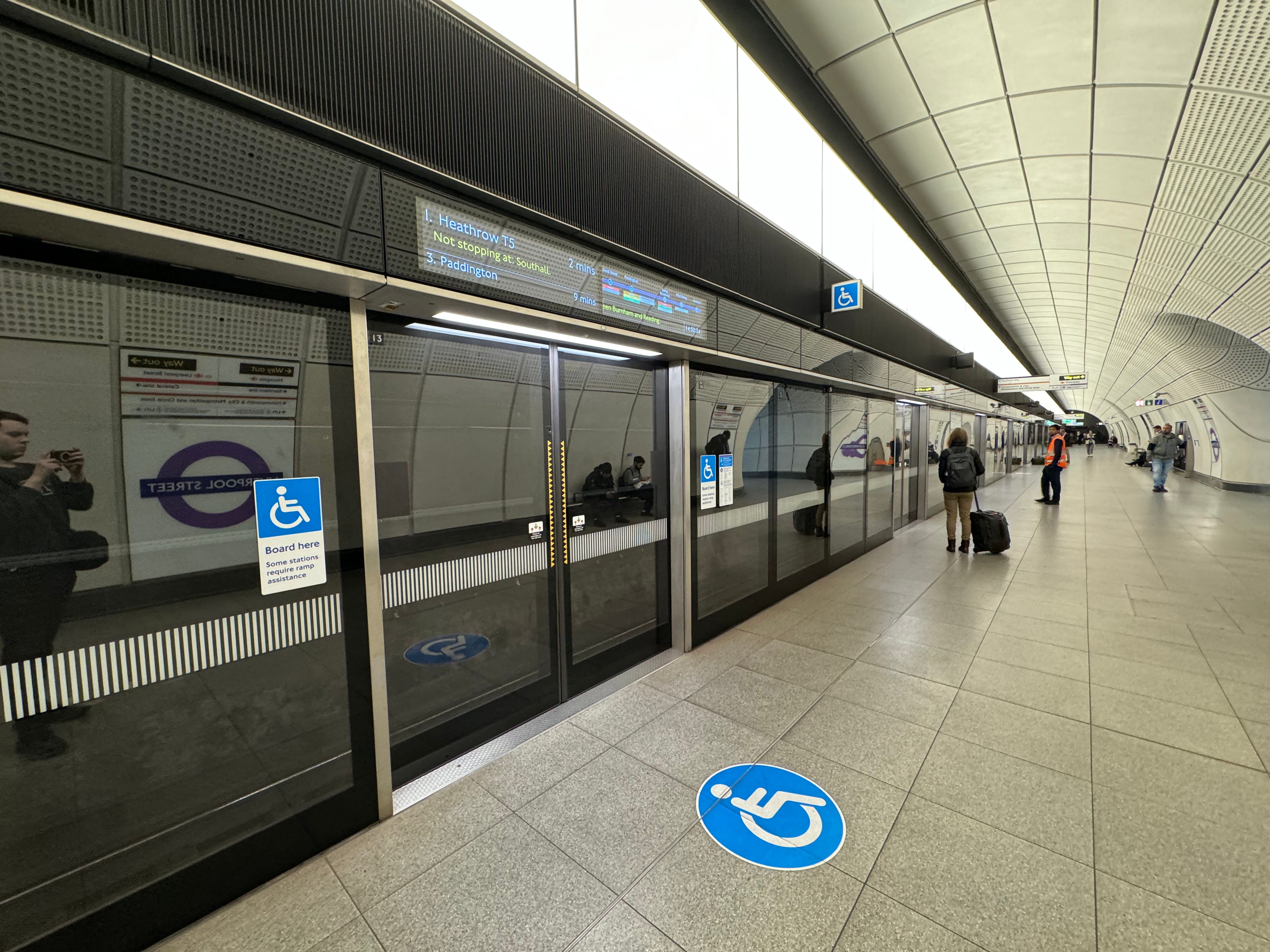
A barrier stands at the edge of the platform, anywhere from hip height all the way up to a glass wall that runs floor to ceiling. This barrier wall is typically made of glass and will feature sliding doors on it, typically also made of glass, which align with the doors of trains. The doors on the platform barrier only open in sync with train doors, ensuring that passengers — and any object of significant size — cannot end up on the tracks.
You Elevate Me
A good comparison to platform screen doors is the outer doors on an elevator. At one point, elevators just used a retractable fence (though rare “paternoster” lifts featured no doors at all), but eventually, automatic doors were added to both the moving elevator cab and the opening in the wall on each floor where you board. One could look at the status quo for trains at stations without screen doors like elevators where the cab doors were fitted, but not the doors where you wait at each floor.
If this seems incredibly dangerous — it would be; someone might look down and lose their balance, or be clipped by a fast-moving cab, or something like a cart or stroller could roll off the edge. The thing is, the status quo at most urban transit stations is not much better, even if it might feel that way. Admittedly, death, while possible, is less certain, but injury is highly likely. For one, platforms are typically a few feet above the rails, and a fall could easily injure you depending on how you landed. But then, at track level, you could be hit by a train — which you are highly unlikely to survive — or be fatally electrocuted.
A major benefit that many people will not realize is that for those with limited eyesight, a train station — especially one with an island platform, and so no wall to lean safely against away from the tracks — can be terrifying. Platform screen doors mean that people with limited eyesight can breathe a sigh of relief and not worry about falling onto the tracks and struggling to climb back onto the platform, not to mention other people who may be otherwise impaired.
Now, we are generally supportive of platform screen doors wherever practical. In some Asian jurisdictions, they are universal or near-universal; many systems and lines were new enough that the doors could be installed from day one, and retrofitting has been done widely — most notably in Japan. While we will mostly talk about metro rail in this article, the reality in Asia these days is that increasingly even trams, regional, and high-speed trains are all being put behind some type of moving safety barrier.
In the Americas, screen doors unfortunately remain a rarity. While screen doors were first used in the late 20th century in places like Singapore, even relatively newly opened projects like Los Angeles’s B and D subway lines from the 1990s and the Canada Line in Vancouver — opened in 2009 — do not feature them. To some extent, this feels cultural: Once exposed to the doors, they become a basic expectation — like with the elevators. Transit operators who have exposure to the technology know about the delays, injuries, and deaths they prevent, and how simple they are to install. Plus, officials planning a project are more likely to look to other systems within a few hours’ flight.
But times are a-changin’. In 2015, Toronto opened its airport rail link line, and the two busiest stations at either end featured platform screen doors. This example highlights another big potential benefit: in environments where it might get particularly cold or hot (this was the major initial motivator for the installation of doors in Singapore), screen doors let you maintain station platforms as climate-controlled spaces. Just a few years later, Montreal started a phased opening of its 67-kilometre-long REM light-metro network — largely based on SkyTrain — where every single station features screen doors. The same will be true of Toronto’s new “Ontario” subway line when it opens sometime in the early 2030s.
First Mover Disadvantage
What’s interesting is that Vancouver used to be the leader in Canada on transit technology. While Toronto and Montreal are only now doing automated rail lines — both the REM and Ontario Line will be fully automated — this was a core feature of SkyTrain from its opening 40 years ago. In fact, the lack of screen doors in Vancouver is likely in no small part because it was automated so early, because the doors were just first being used around the time SkyTrain opened. It is kind of sad to think that Vancouver, which used to be a global leader on transit automation, is now in some senses behind other Canadian cities — not to mention those in Asia — on a basic safety technology.
Vancouver does have a system of lasers and, on the oldest stations, pressure plates, which should prevent an accidental fall from leading into a collision with a train — a basic need for a system with no driver to pull the brake.
However, these systems are reactive, do not ensure perfect track security, and cannot stop someone from ending up in front of a train that is already in the station.
Interestingly, almost every single other automated system has had screen doors installed from the very beginning, such as on Sydney’s new metro or Line 14 in Paris — the number that did not can pretty much be counted on one hand, and most of those have started or plan to retrofit stations.
Don’t miss a single post. Become a subscriber today for the latest on public transport in Canada and beyond.
Get On With It Already
So at this point, Vancouver really needs to come up with a plan to start upgrading its stations with screen doors. This is necessary for safety, national keeping-up-with-the-Joneses, and because it is one of the (thankfully increasingly fewer) things one experiences when visiting Asian subway systems where you just say, “Well, Vancouver doesn’t have those.” Vancouver runs a world-class transit system that it can be proud of — we having looked at transit on multiple continents and in dozens of cities — but this is one major way that the system remains less than.
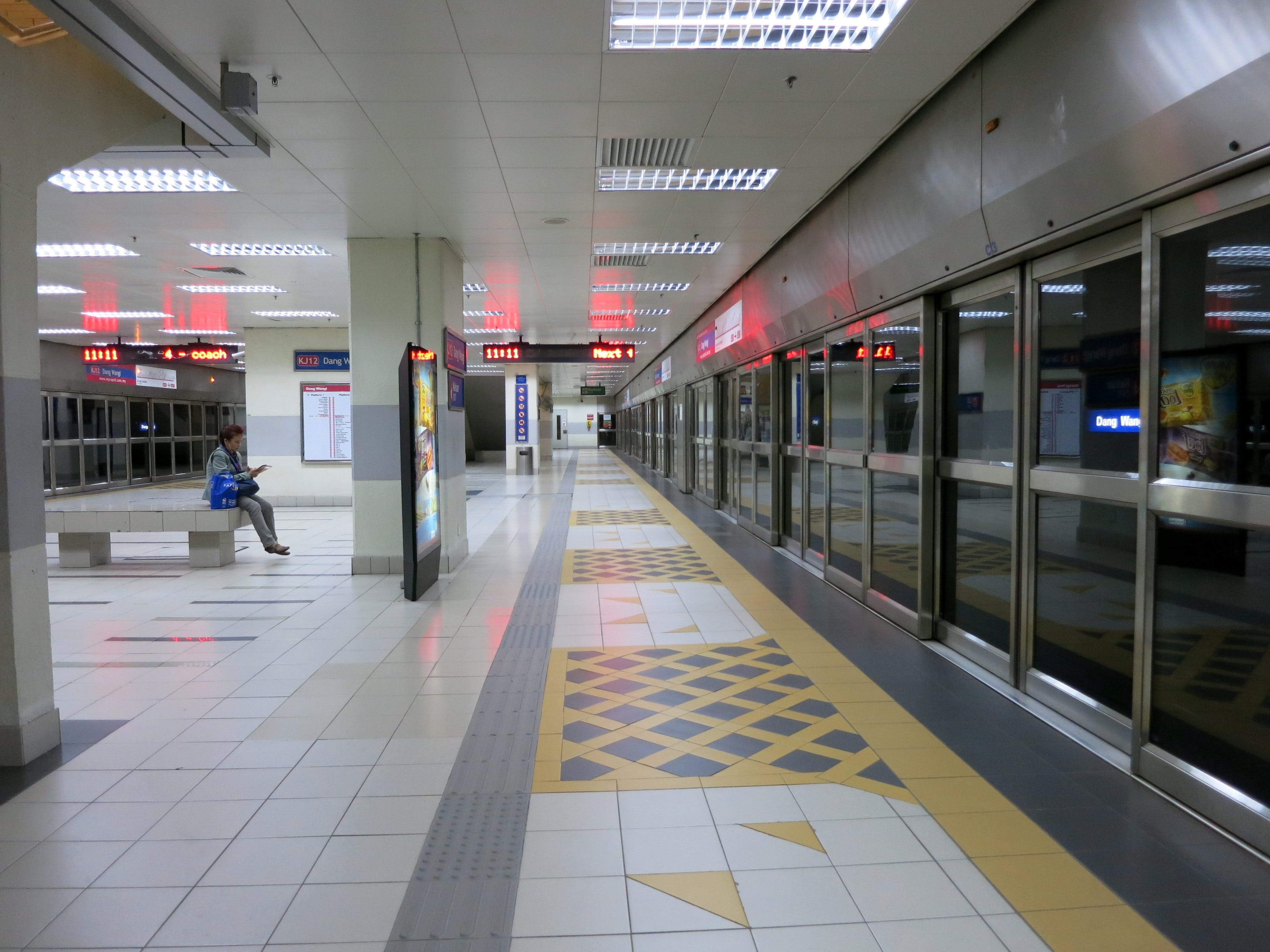
The Kelana Jaya Line in Kuala Lumpur, Malaysia uses the unique SkyTrain metro technology, and several stations on the line feature screen doors, which are a universal feature of the newer lines in the city.
And it is not just the forward-looking reasons. Cities like London, New York, and Toronto, with older, more crowded systems and potentially rowdier populaces, regularly experience dangerous crowding and track fires that cause delays and disruptions that could largely be solved with screen doors.
That is not to mention the immense costs of people taking their lives on transit systems by suicide — a tragic reality I’ve experienced firsthand in Vancouver. This is a horrible thing that happens regularly, traumatizes people, changes lives, and costs the transit system and society a ton of money.
How To
The easiest thing politicians and transit leaders could do to get the ball moving on fixing this problem would be a forward-looking commitment that any future rail project in the region will feature platform barriers. This commitment would cost nothing and would set the tone for fixing the existing system.
Putting screen doors into a new system also unlocks some things you otherwise cannot do. Platform clutter can be reduced by embedding ad boards and wayfinding, as well as adding speakers and lighting into the platform barrier wall. You can also design climate-controlled stations that stay cool in summer and warm in winter, and even filter out air pollution from things like wildfires and the trains’ wheels.
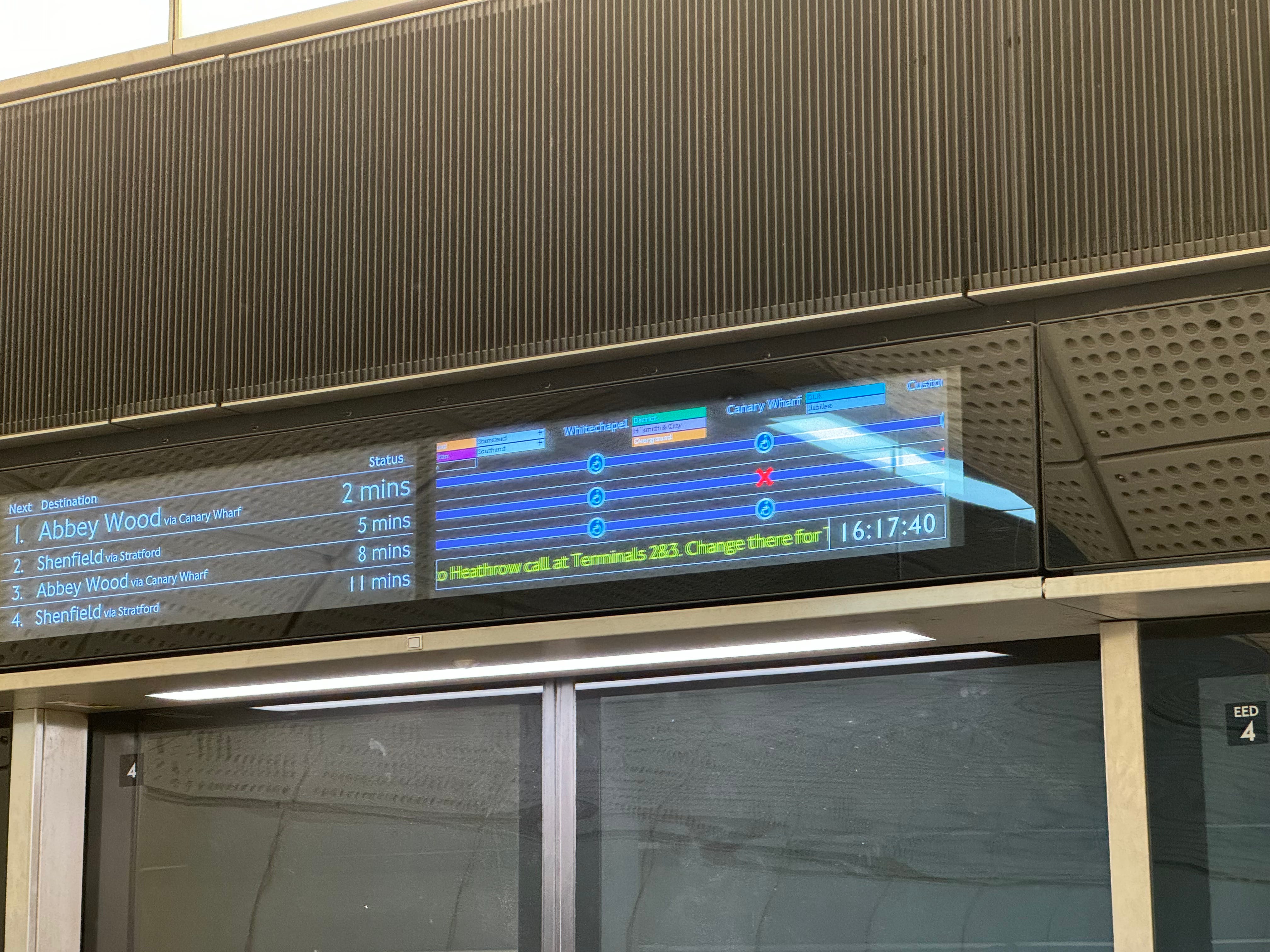
There is also the potential to reduce station costs by placing structural elements like columns in the dead space between set train door positions — something you can see on Montreal’s REM.
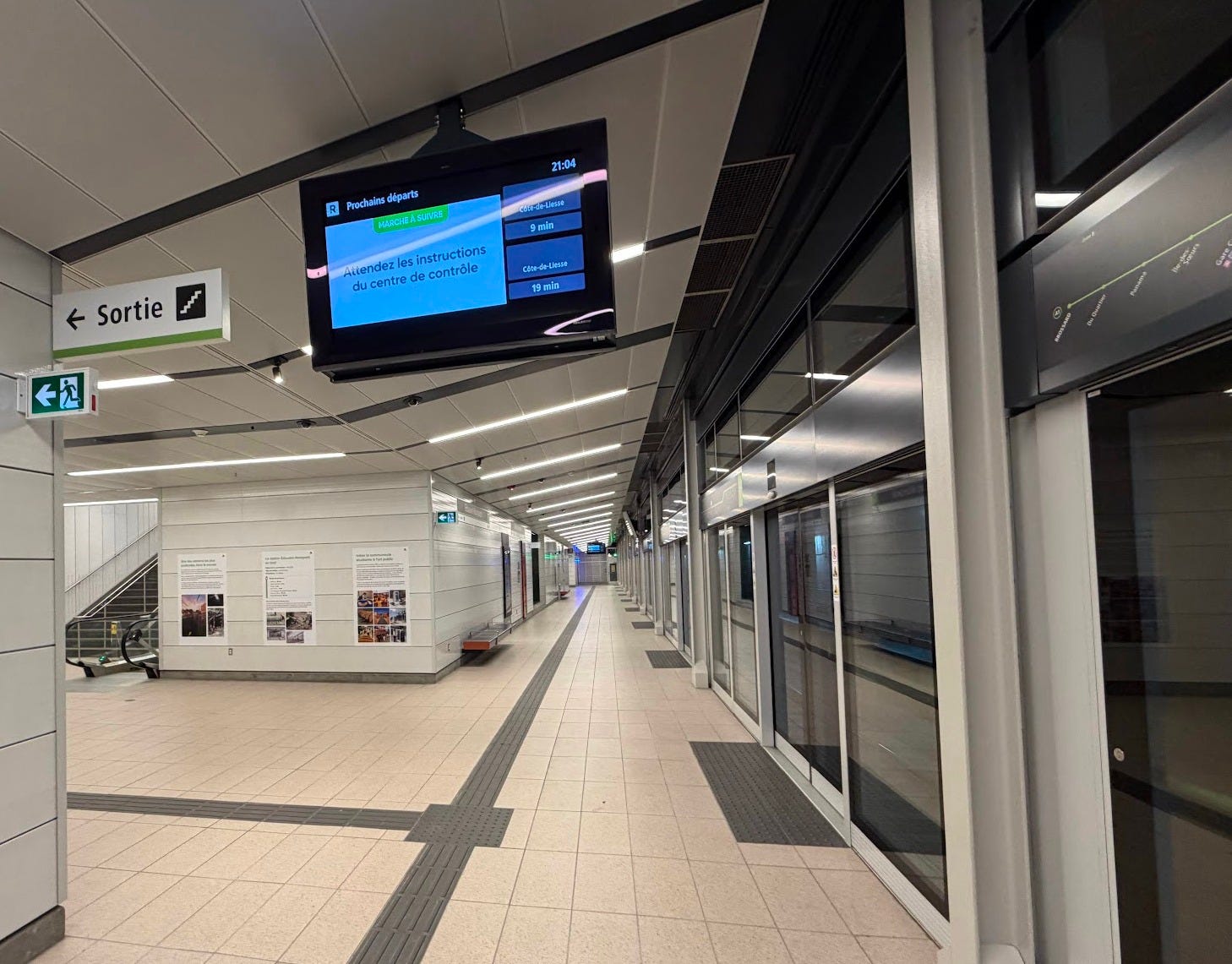
The major lift is not building new stations with screen doors, but incorporating them into the nearly 70 (when the Surrey-Langley SkyTrain and Broadway Subway open) existing stations.
While retrofitting is not entirely trivial, it has been done in many places. Thousands of Japanese and Chinese subway and railway stations have had barriers retrofitted, and more recently, cities like Paris, Vienna, Sydney, Madrid, and more have been putting doors into older stations.
The work in Vancouver is also much easier than in Montreal or Toronto. For one, Vancouver’s stations are smaller. Trains in Vancouver max out at 15 doors, while those in Toronto and Montreal have 24 and 27 respectively, nearly doubling the cost to install. At the same time, Vancouver benefits from newer stations that are mostly above ground. Most stations in Toronto and Montreal were built before SkyTrain existed, and Toronto is 80% underground, while every inch of the Montreal Metro, including several of the yards, is subterranean. Working underground and on older infrastructure means worrying more about things like ventilation, and discovering other problems — including structural ones — while you are undertaking the work. Vancouver, with all of the station and system upgrade work it has done bit by bit over the years, should also be well-equipped to take a program like this on.
While these retrofits are not easy, and neither Toronto nor Montreal has done any yet, it is a bit disappointing that while screen doors have been so widely discussed in Montreal — where designs were worked up before the pandemic for an installation at 10 stations, and Toronto — where funding for them is a plank for at least one major mayoral candidate, they are barely on the map in Vancouver.
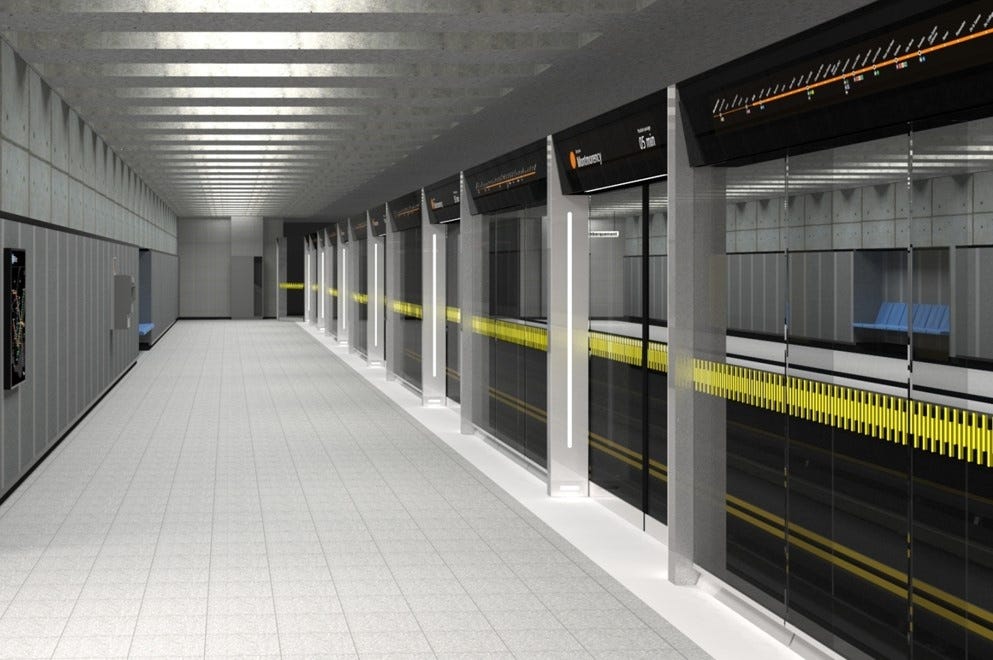
A good idea for the federal government would be to create a national fund to install screen doors, particularly at the busiest stations or high-impact locations. The federal government often seems to be looking for ways to help out without telling cities exactly what to do — by, say, helping them “upgrade” to electric buses — and this would be another useful initiative.
The natural question to ask is what kind of doors Vancouver should install. Floor-to-ceiling models are nice in many ways and can distribute some weight off of a platform edge, potentially reducing the amount of reinforcement that may be needed. One option widely used in Japan is hip-height barriers, but these feel like a mistake because they could still be vaulted over by someone determined. The best bet is likely a roughly head-height barrier like those used on Honolulu’s — SkyTrain-inspired — HART system, or the Sydney Metro (at least on the above-ground and retrofitted stations). These doors both create excellent security and still allow airflow over the top, removing potential ventilation issues.
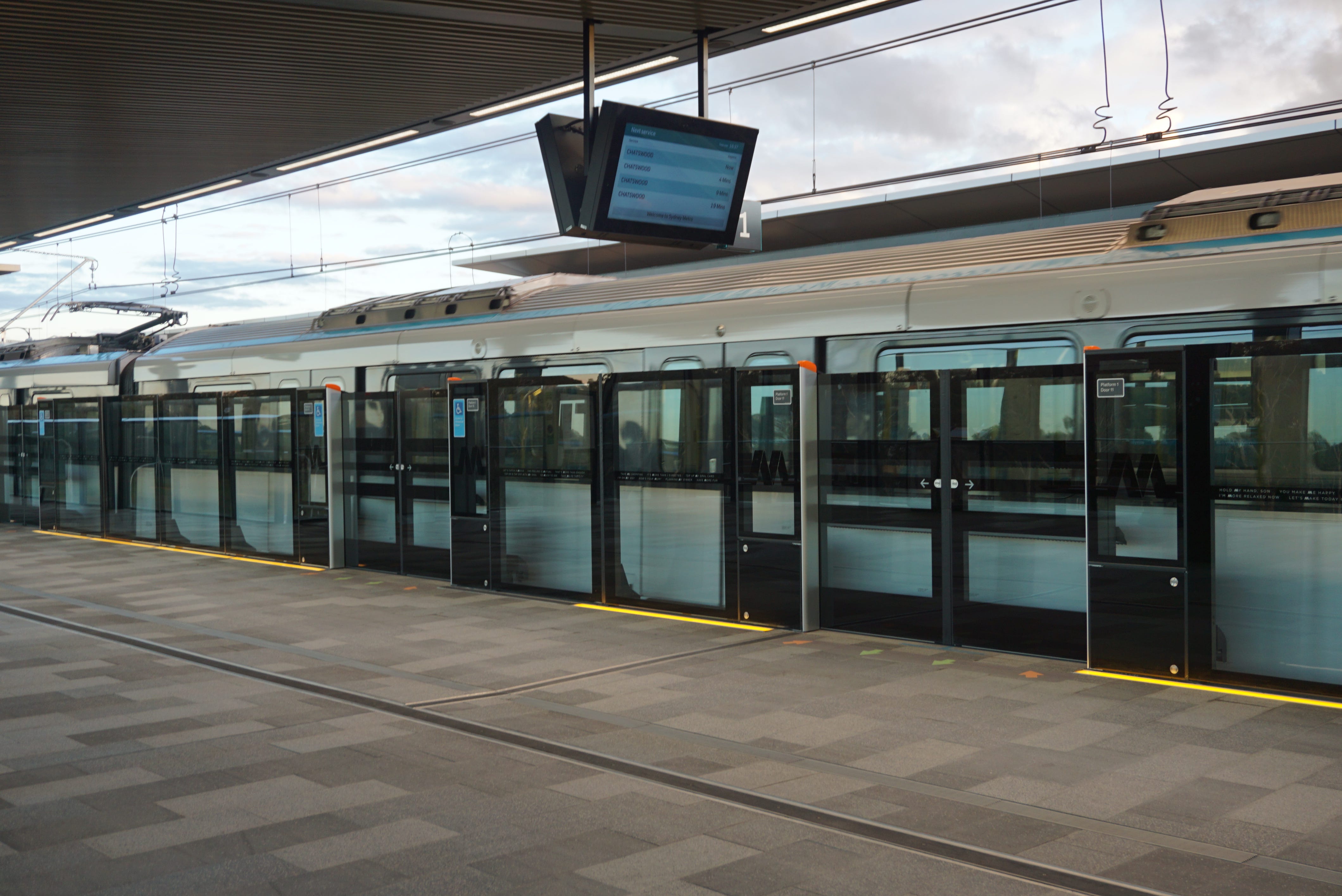
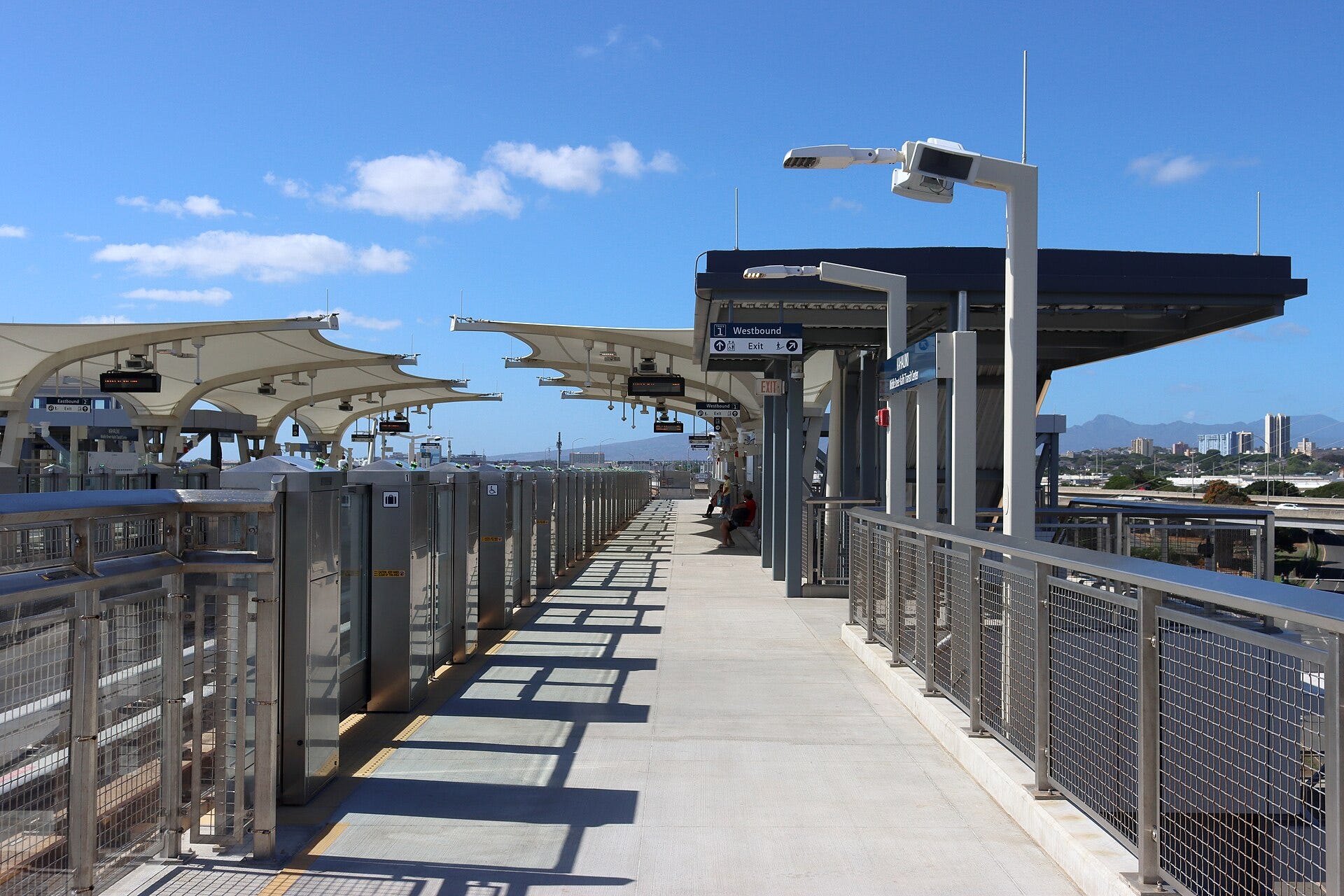
The most obvious place to start deploying these in Vancouver is probably the Canada line. The route has some of the newest infrastructure in the city and a single train design across its fleet allowing constant door positioning.
You could then move on to the Expo Line. The route has many of the busiest stations in the system with the most crowding, and so it would disproportionately benefit. The challenge historically would have been the mixture of different trains running on the line, but the large number of Mark 5 trains TransLink has ordered could likely field a full service on the line and so can also provide a consistent door spacing.
Things might be a bit more delayed with the Millennium Line, but given retrofits on the other lines would not be an overnight process, by the time you get around to it you’d likely be talking about a new fleet anyways.
In terms of price, while Toronto officials have quoted a very hefty $5 billion CAD to retrofit that entire system, the number is subject to typical “cost disease.” Vancouver also benefits from fewer, smaller stations. Even if things were as grossly inflated as Toronto’s, the price would be more like $2.4 billion. Paris has installed screen doors in century-old stations for just a few million CAD per station, so at their prices, Vancouver could do its whole system — leaping past London, New York, Toronto, and yes, Paris — for less than a billion dollars.
Its worth mentioning installation and that process as well. You tend to see that the North American transit systems — Vancouver included, are pretty conservative about new things like screen doors. They will often say things that make the process seem more onerous than it is. “If we get screen doors we would need to remove the old sensors and create new power systems” which is like someone looking at an EV and saying “well I’d need to not have my gas car anymore, and I’d need to find a plug in my garage”. Installing the doors while service continues to operate has happened in plenty of cities and need not mean frequent massive shutdowns over long periods of time. What it does mean is things like brackets appearing at the edge of the platform over weeks and a period of time where screen doors probably only cover part of a platform.
The Thales SelTrac signalling system used on SkyTrain is truly excellent and better than many newer signalling systems, and a number of other systems that use it — such as the Jubilee Line in London — have screen doors.
However, there is a catch. SelTrac has somewhat poor platform precision, which you can see with poor platform alignment on the aforementioned Jubilee Line.
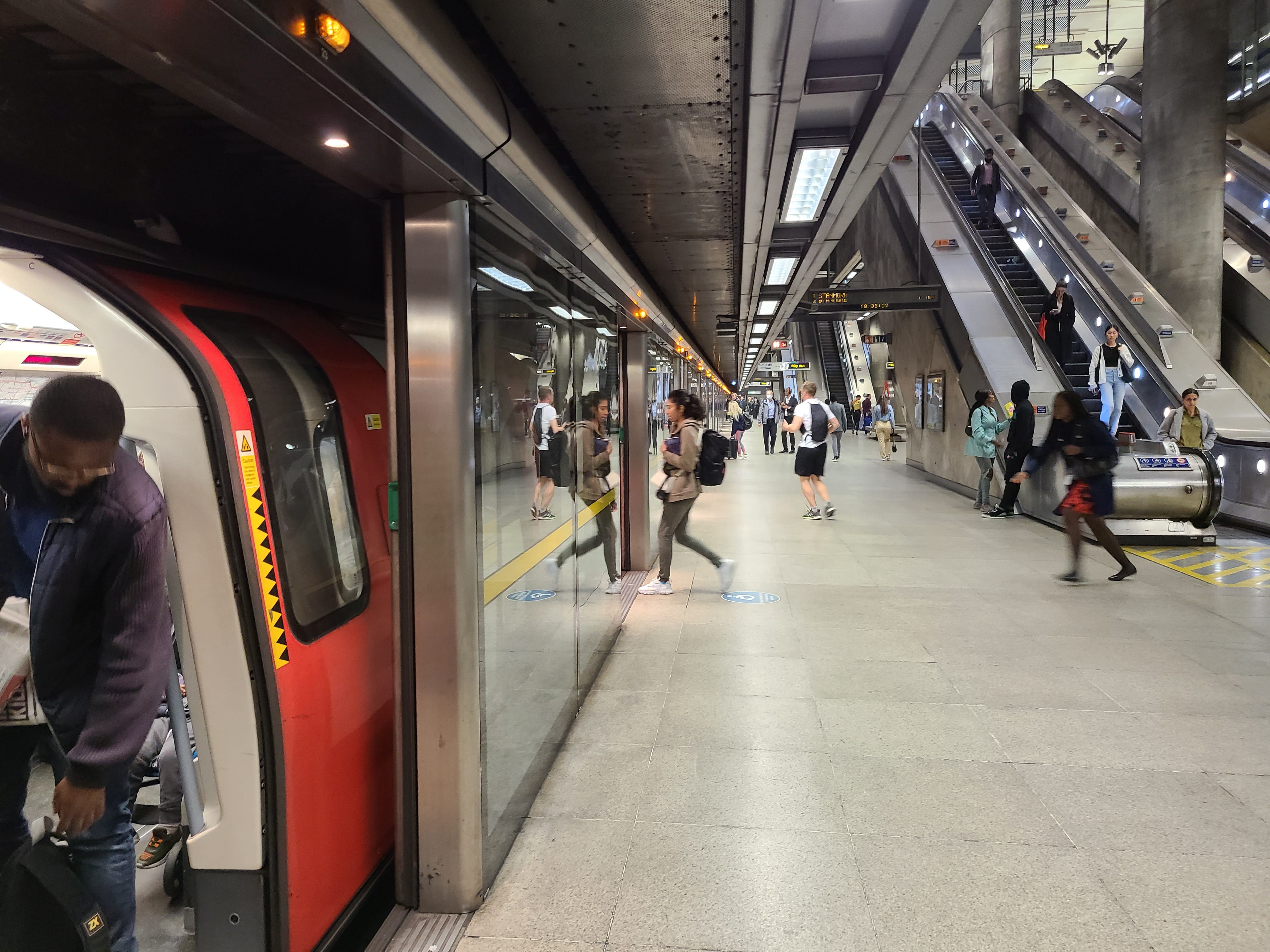
Vancouver could — as London does — live with it, but a system of tags mounted to the trains and sensors on the platforms could tell a screen door system with slightly wider than needed doors exactly how much to open for perfect alignment every time.
All of this might feel like a lot, but the reality is pretty simple. Screen doors are good, and widely used around the world — virtually universally in Asia and on automated systems. Vancouver is also an unusually good transit city for North America. Pairing a good technology with an ambitious city that cares about transit while many of its peers don’t is a slam dunk.
Keeping abreast of the transit networks across all of Canada’s big cities takes a lot of time and commitment. The Transit Brief lives and dies by your support. To receive new posts and support my work, consider becoming a free or paid subscriber.
Thank you.
If you enjoyed this post, consider sharing “The Transit Brief”.
Made with love, in Canada - 2026.
Ottawa's tram trains have platform edge sensors. If one stands close to the platform edge in an empty station, an announcement comes on advising people to wait behind the yellow line. The next train that comes into that platform arrives at an agonizingly slow crawl. I wonder if this is related to Ottawa's refusal to use the green door opening buttons except at terminal stations, as using it requires people to come up to to touch the car sides/button. Occasionally as trains begin to depart latecommers still run up, often laughing, jabbing at the button. The trains may even stop because someone is touching the train, but the doors don't reopen so the jabber isn't rewarded by delaying the train.
Platform screen doors are very useful for people wearing glasses who fog up or get moisture covered in winter or inclement weather, or who wear masks that direct their warm moist exhales up over their face. I was shocked when Ottawa's tram opened how easy to was to mistake the gap between the cars for door openings when fogged up.
I just returned from Czechia and [the former East-]Germany and experienced several elevators where there was a lobby-side door to prevent people from falling into the shaft, but no in-car door. As the car moved, the shaft wall slid by, up or down, so don't lean on it. I chalk this up to a disappearing world experience, like French bird-cage elevators. In Prague I sought out a public building with a paternoster elevator, which city staff assured me was still in operation but closed to tourists as it took one onto the private working floors of the municipal building. Claiming I came all the way from Canada to see it didn't make her budge.