

The Finch LRT and Our Mistakes.
A post to get it out of my system.

I was at an event filled with policy wonks tonight, and there was a lot of expletive-laden talk of the Finch West LRT. Toronto is the city that closed a subway line, and now it’s going to be the city that opened a new tram slower than the bus it replaced. It feels like a rough period.
To some extent, it is just us living with the outcomes of decisions, made years and years ago by people who mostly are not making decisions anymore (except for on the city’s whole streetcar network).
This is going to be a very ranty and frustrated post. I care a lot about transit in Toronto. I’m going to get up at an ungodly hour tomorrow to go ride the first Finch light rail train, I use transit in the city constantly and it’s most of the reason I moved here. I’m a little more optimistic than I have been in a long time that we can actually fix these problems, but the proof will be in the pudding. I actually think the transit projects we have on the horizon are great, so if we manage to sort this out, it will be all the better.
But still damn, I really wish we got a better outcome here from the jump.
I have now written three different pieces on the Finch West LRT:
I wrote this one in the Toronto Star noting the understandable excitement, but major self-inflicted issues with the line.
And then I wrote this one in UrbanToronto talking about how now that we have the line we ought to expand it east and west.
This post is for me to get out my lingering frustrations, and I should have one last one in the next day or two that includes what will likely be more positive thoughts riding the line for the first time with other people — which will miraculously be the first time a major rail project opens in Toronto since I started doing YouTube in a serious way, even as Ottawa, Kitchener, Montreal, and Edmonton have all opened new stuff. In fact, I’ve already started to write this post and it is a totally different tone — maybe I just like playing good-cop-bad-cop with myself.
I think maybe nothing could paint the issue I have with the Finch West LRT better than this story. I know someone who long lived in North York and worked at Humber College, and for the longest time, the fastest way for them to get to work was to travel all the way down to Line 2, all the way across the city on the subway, and then all the way back up on another bus. Even with Finch West, which literally runs to Humber College, this will still 100% be the fastest way to get there from huge parts of the city.
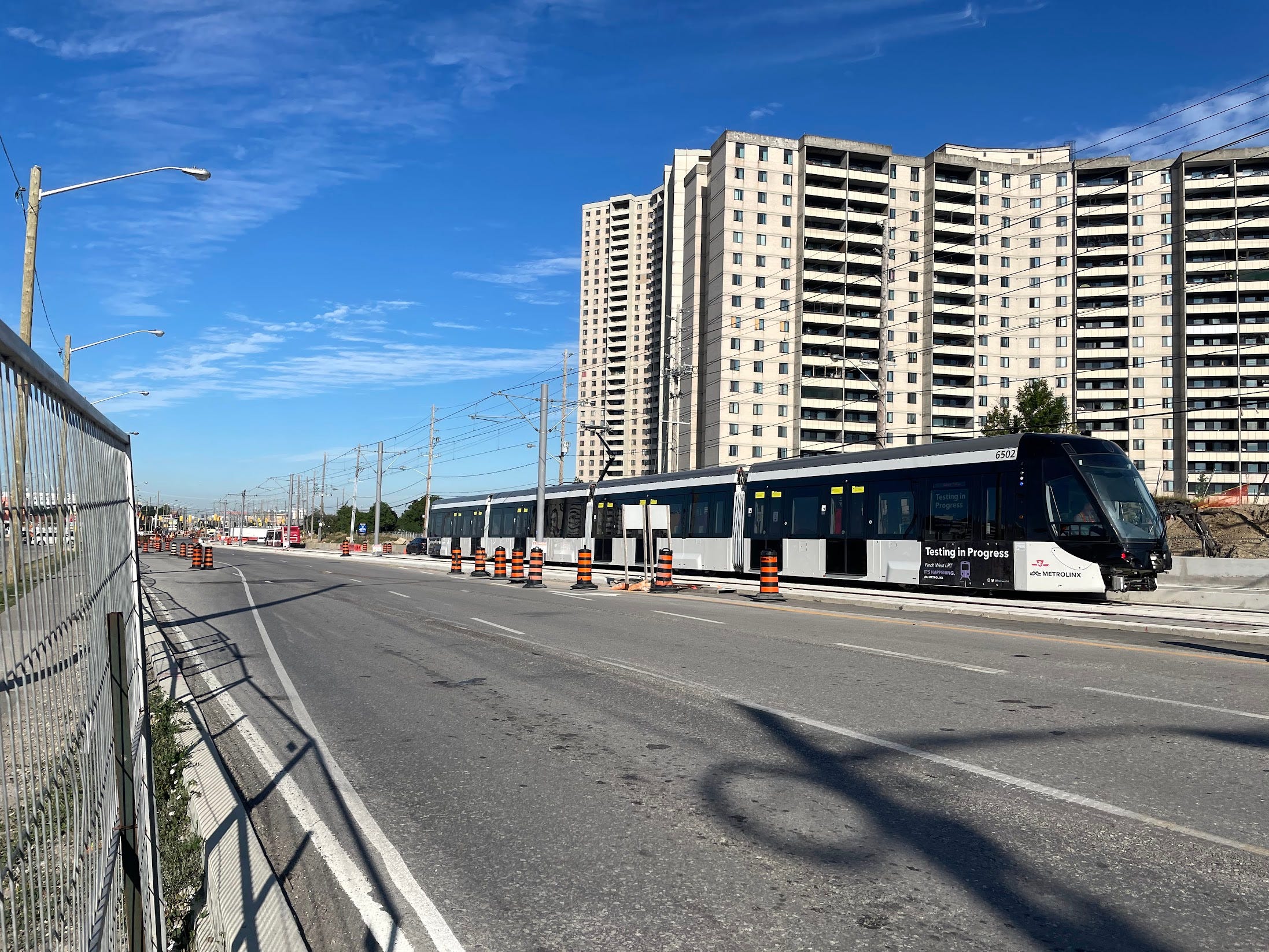
Let’s look at the bigger picture. We live on the car continent, cars are fast and convenient, transit doesn’t always need to be, but big projects that don’t really improve on these metrics should raise eyebrows. Travel surveys frequently cite travel time as a top driver for transport decision making across socioeconomic lines, and that should be obvious — how quickly one gets where they want to go is a big part of choosing how to get there. Cars are also famously popular because you hop in and go — frequent transit is so important because it replicates that ability to be spontaneous, and because if you’re a minute late, you can just catch the next one.
It shouldn’t surprise you then that it is crazy that we’ve built a new multi-billion dollar transit line in Toronto that is both less frequent and often slower the bus it replaces.
This was frankly foreseeable: Toronto does not have fast streetcars with good signal priority and operations downtown in transit’s natural domain, in part because of car-brained politics and also bureaucracy. How anyone thought the outcome would be different in the suburbs without an enormous fight is perplexing.
But then again, this was more or less the entire plan laid out by Transit City, a plan which after being cancelled was mourned for years, and for which the mayor who pushed the plan has now turned into probably the most negative voice on the Ontario Line — which is quite possibly the most important transit project on this continent to happen this century. The plan was not great for many reasons: it proposed a bunch of lines that would be like Finch, require a ton of transferring, and be very slow. The design of the lines — despite horror directed at anyone who would compare them to a streetcar — was in the exact style of the St. Clair streetcar, with left turn lanes for cars to go ahead of trams, tracks that stay stuck in the middle of the road, and more. This was not the attractive, contextually-sensitive, well-prioritized, integrated trams of France, but a sort of sloppy attempt to extend Toronto’s already not-great streetcars to as many wards of the city as possible. There was always a lot of “Rob Ford is playing politics” and “Rob Ford is cancelling transit for the suburbs”, but people were 100% aware that streetcars in Toronto are slow, that these would be akin to those lines, and that subways would mean speed and reliability. Ironically, people really did want subways (they weren’t lacking transit — Toronto’s suburbs are absolutely brimming with frequent buses) because they would actually be additive to the transit experience; they would make it fast, but what was given was a plan that would put “lines on the map” in a way that hit as many politicians ward as possible.
Now, none of this is to say that you can’t make a nice tram that is fast and attractive; I might still not think that’s a great use of the marginal capital dollar in a car-dominated place, but it’s at least better. However, that’s not what we got.
I essentially never saw the same people (and politicians) who had “Save Transit City!” profile picture frames on social media seem to care much at all as the details of how bad these trams would be leaked out over years. They were willing to change their profile pictures, but not loudly advocate for strong signal priority or shake things up at the TTC when they decided to implement policies that barely made sense on the streetcars on brand new tram lines. So it’s not clear they cared much about “saving” anything but some small number of votes from people who thought this was somehow a good initiative to get people on transit. I think in part that’s because this wasn’t transit for people who use transit, or who might for most people and certainly most politicians — it was transit that will look best though the window of a car as you zip past it stopped at a light. I can’t name the number of times I got into a debate with someone about the usefulness of the light rail lines only to find out that they were defending it, but also owned a car while I was actually someone who needed transit to be fast because I didn’t have a car to lean on when I needed to get somewhere in a hurry.
Getting back to the reality that you can build a good tram, it certainly lends credence to the idea to the people who wrongly say “it can’t be done well” when all modern tram projects in Toronto are slow and provide a poor service. It’s also total validation for the much more reasonable people who say “it won’t be done well”.
Something I’ve realized over literally years advocating for transit in multiple cities is that all transit is contingent. You can have a subway, and if it’s poorly maintained or not properly funded, service might be slow and unreliable. That being said, these tram lines were way way more contingent because they relied on a never validated assumption that you were going to be able to design a high-quality tram system in suburban Toronto, and somehow convince the transportation department at the city to provide serious signal priority when they won’t even do it in the downtown core. I like trams quite a lot, particularly the quaint old European systems and some of the newer systems in Northern Europe, but there’s a reason my prescription for North American cities is usually various colours of subway or metro. When your transit doesn’t have to interact with the streets, you eliminate all kinds of potential blockers that get in the way of fast and reliable service, and they’re also able to compete with the primary motive transportation on this continent, which is the car — by being faster than it, not by trying to slow it down (an admirable cause, but one which is obviously a very hard battle and maybe something that you don’t want to hinge your entire transit system succeeding on).
Where we are left now is wondering if Eglinton will be any better (nothing, including directly observing the operations of the line, should suggests to me that it will). And personally, I’m slightly irked at all the flack I’ve gotten over the years for saying I don’t think that these lines were going to be fast even when there was no real evidence to suggest that they were going to be fast! I mean, I’m not happy to go “I was right!” — it was a strategically good bet because either I was right or transit was fast; but guess what, I’d have preferred to be wrong! What’s worse is that I know for a fact that less service will be operated on the light rail lines because they are so slow, because it’s literally a constraint on the number of vehicles that can be operated with the current fleets. If it takes you too long to get from end to end on the line, you just can’t operate as many trips past any given point with the same sized fleet.
One thing that definitely needs to be put to rest is the crazy “streetcars and LRT are different!” thing. For years and years, particularly politicians and some advocates who were supportive of the light rail projects had an absolute fit anytime you compared them to a streetcar. And I mean, it’s fair to say that these projects are not the exact same as the Toronto streetcars. But the Toronto streetcars aren’t even the exact same as the Toronto streetcars! The difference between a mixed-traffic route like the 506 and the St. Clair streetcar is the same as the difference between St. Clair and Finch. Hilariously, the TTC itself has labelled Finch as a streetcar on Google Maps! The reality is that tramways or “light rail” or streetcars all exist on a spectrum, much more than subway systems — they are just more contingent and contextual. The reality is that a slow light rail line is not going to be noticeably different to most people from a dedicated right-of-way streetcar, and I mean, the vehicles are also almost the exact same! I actually got into an argument on Twitter with one city councillor a few years back because he claimed that light rail was nothing like the streetcars, at which point I posted a picture of a TTC LRV in a dedicated right-of-way, and of one of the new Metrolinx ones. Anyways, the distinction never made sense, and I made that clear in the Star piece.
Now, what I have experienced is a lot of people defending Finch West by saying “it’s smoother!” or that there’s level boarding, and I mean I agree, these are real good things — but they don’t justify a multi-billion dollar transit line alone! Again, speed and frequency are the bread and butter of transit, not “smoothness”. Something I’ve heard a bit more loudly and consistently is that the line is needed for capacity, this is a weird argument! Of course the Finch West bus is busy, but it’s not like the only solution to busy bus line is … tram! We could have done bus lanes — the buses were very busy, but service expansion was absolutely possible, there is and was not even an express bus on Finch West! (I’ve heard from a few places that may well because it would have made the light rail travel times look even worse, since even the regular local bus will beat it during some of the time). Vancouver (and Brampton) model this extremely well: like the subway in New York, they run both local and express services all-day long (many Toronto expresses are limited to peak commute hours), which adds capacity and separates longer distance and local trips onto separate routes. They also do nice stops (oh how I wish Toronto had these) and use a lot of queue jumps and other intersection treatments as opposed to a lot of dedicated bus lanes, which have a higher impact-to-visibility ratio I’d say, which probably helps reduce pushback from drivers while still being highly impactful. One person online said something like “Finch didn’t have to be fast, capacity was the bottleneck!” but again, you can run and walk at the same time. Finch will have more capacity, but there’s literally no good reason we couldn’t also have it be faster. Faster transit would encourage the use of that capacity, and if Finch was faster, it could run with higher frequencies, which will further increase capacity. All of these things are connected, and obviously while a big new transit project can and should expand capacity, it absolutely should and can do other things as well! There isn’t just one single issue that any given mega project should address, we should try to address as many things as possible!
I’ve kind of talked about this a lot, but to remind you the specific reasons why Finch West is so slow:
Stops are on average 500 metres apart, much closer together than subway stations even though the trams can’t go at subway speeds. The TTC and some Toronto transit influentials seems super opposed to running multiple service services on one street with different stop spacing even though this is a pretty obvious thing to do. What that means is that the Finch line has a super tight stop spacing that’s still kind of wide for a true local service, but which is way too close together to provide any sort of express — I mean, it’s literally slower than the old local bus.
Signal priority will be weak (it’s so important to remember that you can have signal priority without it being good, which is why I always try to say we should have good signal priority or strong signal priority).
Restrictions to speeds imposed by the TTC through intersections with weird conditions (as far as I can tell for supposed safety reasons).
Alignment design — the line runs down the middle of the street almost exclusively, has loads of intersections, is not grade-separated besides at the ends of the route, and didn’t do creative things like utilize the Finch Hydro corridor to be actual rapid transit (~15kph average speeds are not rapid — the subway easily has twice the average speed).
Slow zones — trains travel shockingly slowly around the western terminus at Humber College through the curve under Highway 27 as well as through switches, and this really ought to be addressed.
Some of these things are predictable, but some of them are surprising, and what’s so frustrating is that basically all of this is that the powers that be and people in charge were and had to be aware of this, and nothing was done for years and years. Not only does that mean a problem that advocates need to work to fix , but also it runs the risk of a bad first impression for riders who try the line early before any changes can be made, hurting ridership long term (oh I can’t commute on this it’s way too slow).
I’m actually working pretty hard at the moment with others to advocate for changes to street design, signal priority, and other policy and infrastructure matters, and some early wins appear to be materializing at city hall. I’m really proud of this work, but it would really suck to have to do it for new multi-billion dollar lines that should be fast and rationally operated from day one.
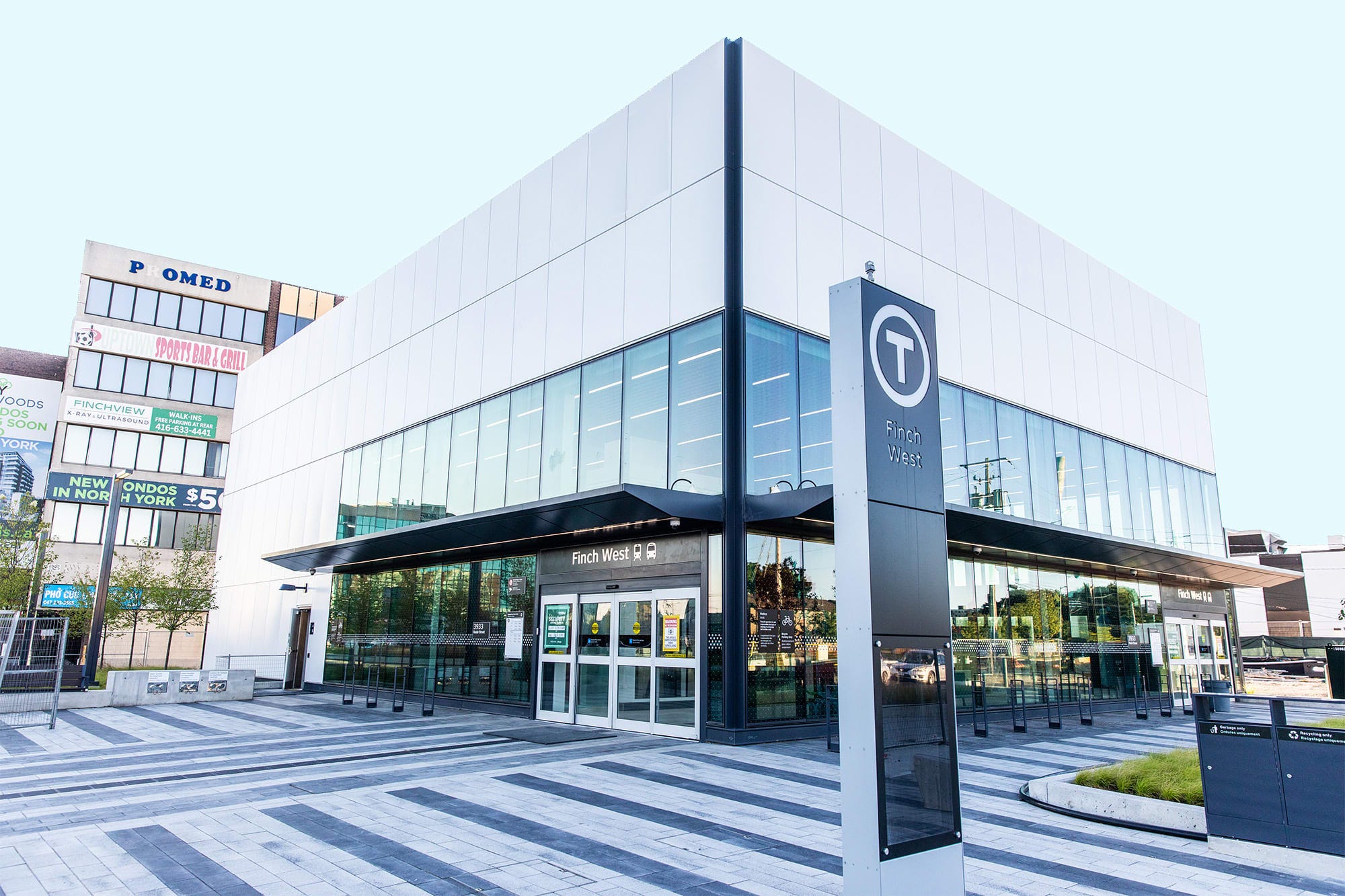
Something which I think might lead to some complaining, and which also was probably avoidable, is the transfer at Finch West station. To be clear, it’s not the worst transfer in the world, but it is also a bit surprising that to transfer between two modern transit lines that were planned in close proximity to each other, you have to go up then back down and then up again.
I’ve actually talked a lot about this particular issue with my transit nerd friends, and I think the issue can basically be summarized as being each project optimizing for its own costs. If either the subway or light rail had been deeper (and more expensive) or if a different better transfer design had been anticipated from the beginning, you could’ve had simpler transfer; but because each project design was done in a sort of vacuum, only minimally thinking about the other this is the result you get.
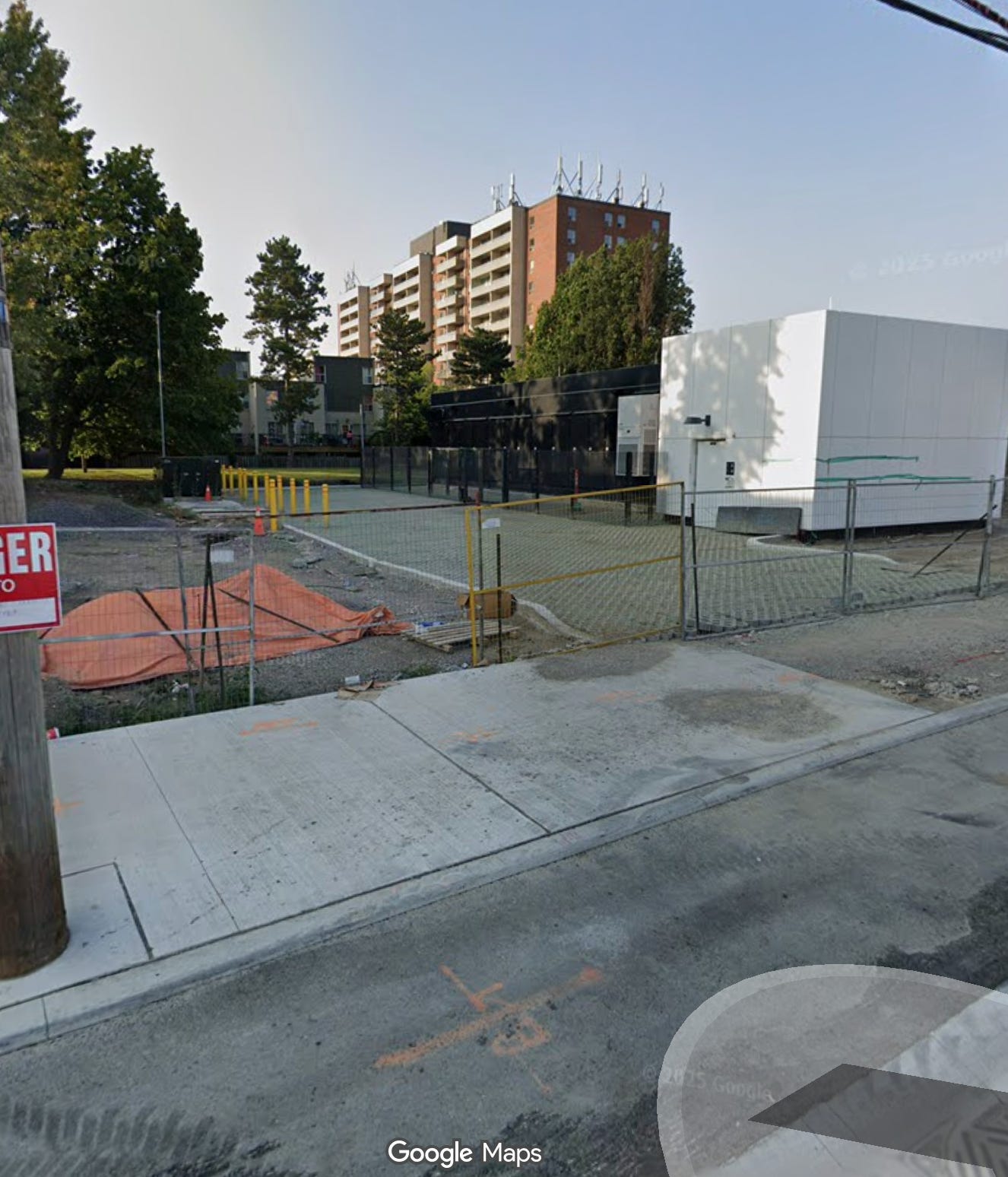
For another niche concern that sort of for reflects bad planning and really ought to be fixed — but may just dither for years, the maintenance garage for the line does not have a traffic signal to stop cars when vehicles are coming in and out. This is basically the exact same issue that exists at a huge number of locations on the streetcar network, and it’s frankly depressing that nobody seemed to be able to get a fix for this decades-old problem on a brand new multi-billion dollar transit line.
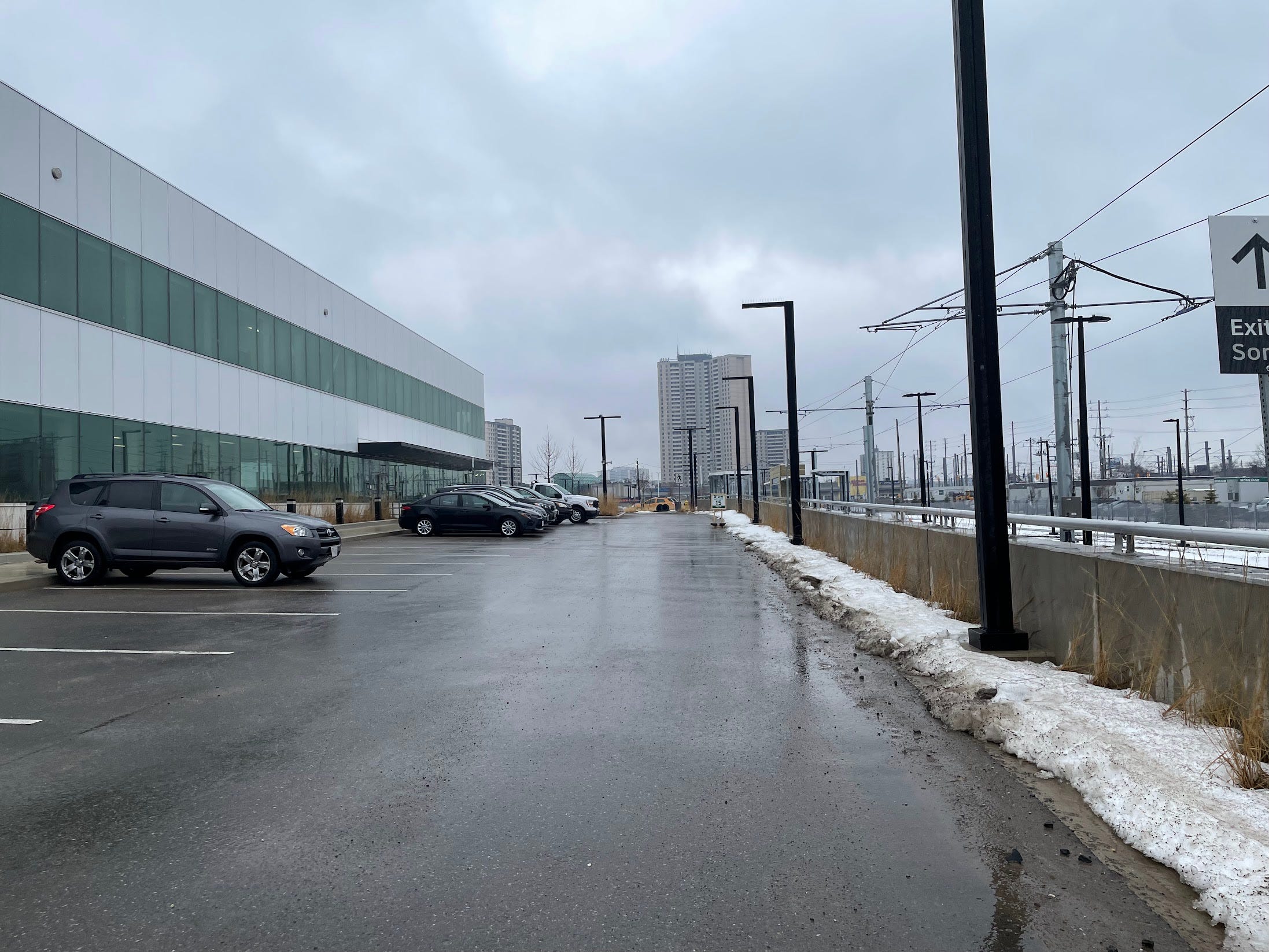
And I mean, then, there are the costs. This line is more expensive per kilometre than the Sheppard subway, which is often derided by the same politicians who were supportive of transit city and are now silent when the actual outcome for transit users is terrible (and yet these problems could be fixed with sufficient political will!)
Of course, so many of these problems come back to poor design and planning up and down the project. We had a hydro corridor (power transmission corridor) that could’ve served as a perfectly adequate right-of-way for a big chunk of the line and allowed it to go way faster, and yet we didn’t use it — the excuse I’ve always heard is that people want to go to destinations along Finch itself? That’s definitely true, but they could’ve taken the train, walked a short distance, and still get there like 15 minutes faster if we had given an even the smallest effort to making this thing fast. At the same time, this kind of reasoning is circular: the whole point of major transit projects is to drive new development, so if you put a transit project in a utility corridor, you’re ideally going to draw development that transforms that corridor. (I’m aware that the hydro corridor itself can’t be developed, but Finch & Yonge shows you can totally have high-density right next to one). And I mean, this general principle can be extended to almost everything on the line. I’ve said a time again, though not as much recently, but even if I did think a tram was the right answer here. It was so obvious that the design that we got wasn’t for a good tram. The grey livery of the vehicles is ugly when there was an opportunity to add colour to the often desolate Toronto environment (and I mean, this line is a perfect example — opening in winter in an area surrounded by grey towers and parking lots). It’s actually remarkable if you go look at the light rail built in Sydney (one of Toronto’s contemporaries, but a city that takes design an order of magnitude more seriously), the trains look better, the stops look better — heck, even the utility buildings where they store the electrical equipment are these handsome brick structures while Toronto’s look like trailers parked at the side of the road.
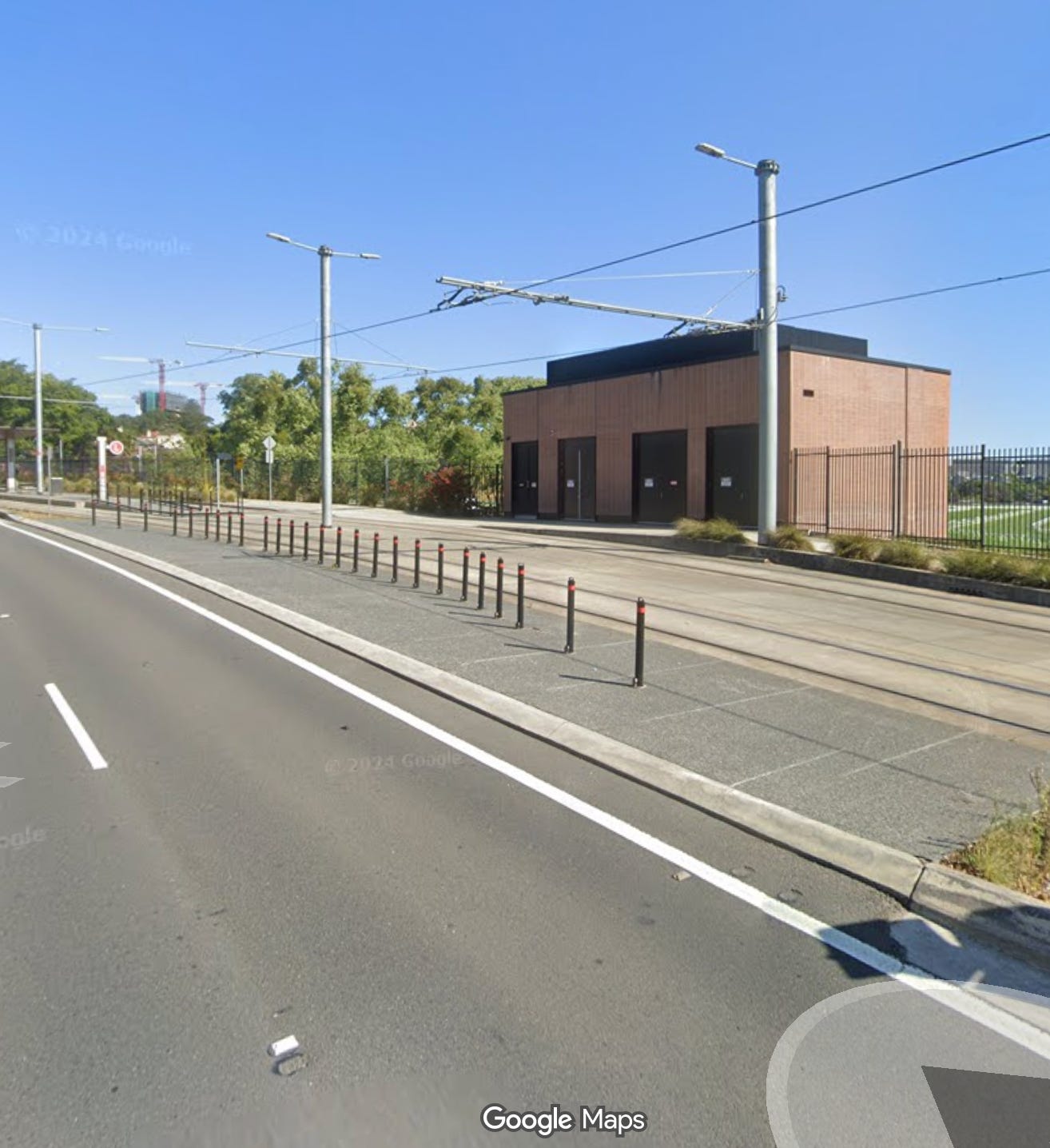
And Sydney’s light rail has been open for years and years! It really sends a signal that our leaders, or at least our planners don’t really travel to any other city (I would say Sydney’s great design is actually pretty typical of modern trams outside of North America).
At the same time again, I just can’t reconcile the fact that many of the biggest supporters of rolling out to tons of additional trams to Toronto didn’t seem to really care much about implementing all of the conditions that would make them successful or even designing them so they looked as good as those in other cities. I often heard Paris and other French cities (referenced as examples of places that had built “light rail” — they are trams — but if anyone had bothered to Google a picture, they would see that even systems built in France a quarter century ago smoke us on design and function. That this wasn’t an issue sooner for those that really wanted trams confuses me.
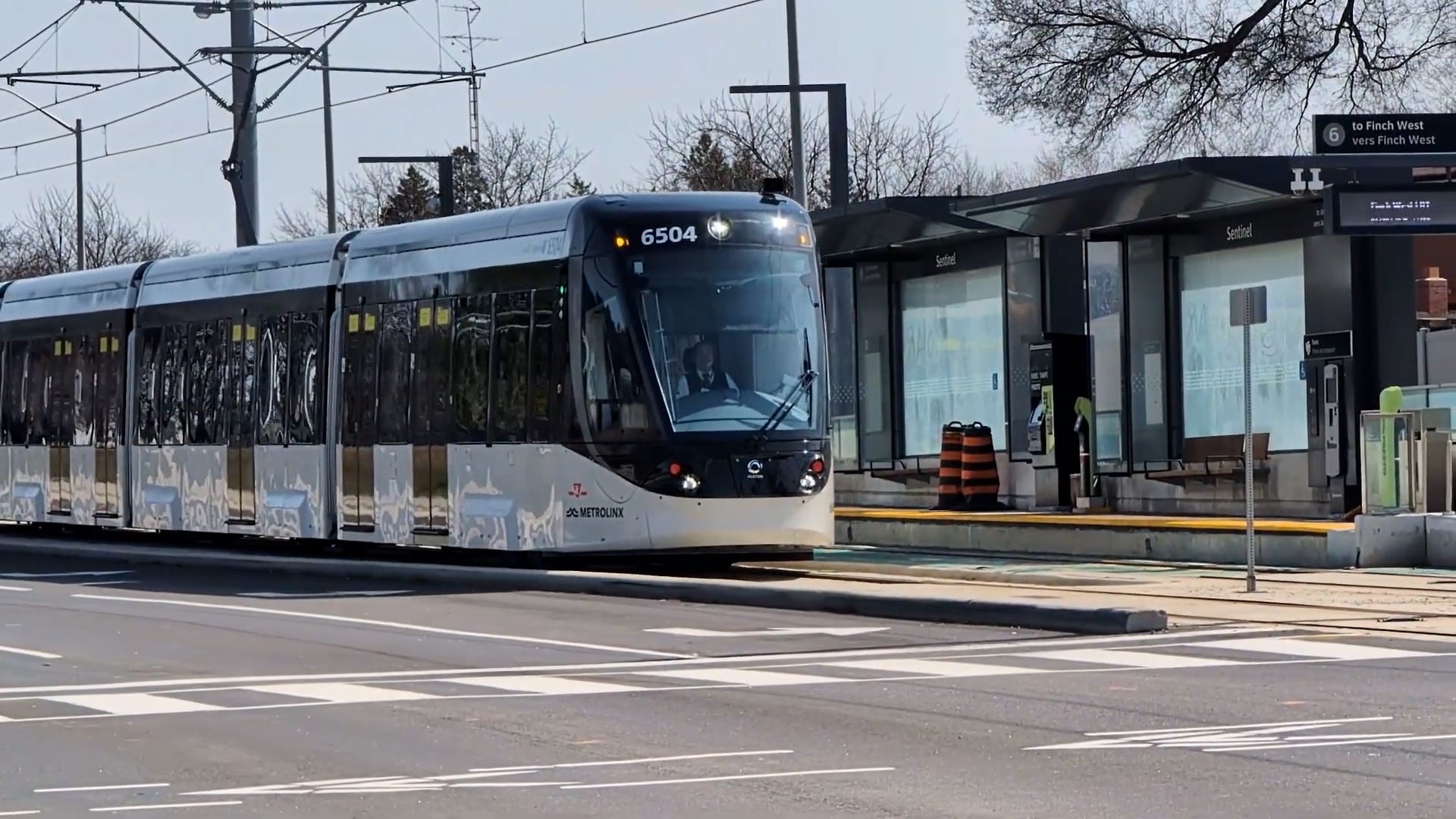
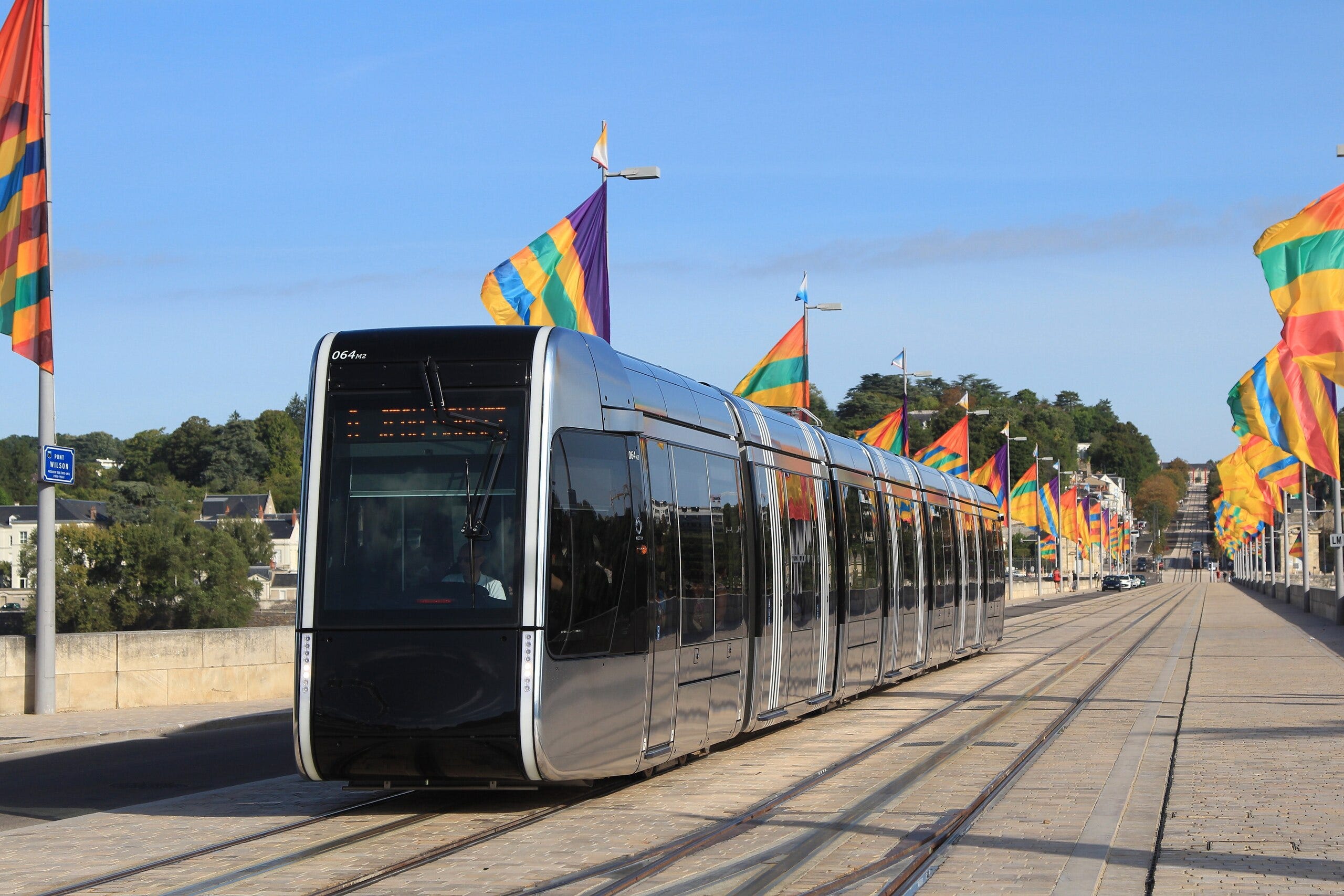
Of course, there were also obviously people on the inside of this project who probably for years knew about all these issues with speed, etc., including senior leadership at the relevant agencies, and yet nothing was done! Instead, it’s now up to advocates to try to explain that no, all trams do not operate at a snail’s pace. The thing is this is a crazymaking process (as someone who has had to do it before) because politicians being rational people just can’t imagine why you would self-impose restrictions and other policies that would make a thing that you operate worse. It would be like opening a restaurant and then only actually operating the restaurant for one hour a day and not telling any of your customers with that hour was. Trying to explain to politicians what the issue is involves first explaining to them how absolutely crazy and out of line with the rest of the world this city often is.
So honestly, one of my biggest concerns going into this line opening is just that it’s going to be trapped being slow. There will probably be a bit of a media kerfuffle around the opening. But especially because it runs through marginalized communities I’m not sure politicians and the media will much care about how painfully slow the commute we’ve trapped people with is going to be. It will literally take people almost as long to just get across Finch as it will to take the subway downtown! And so this project ends up not really functioning as a piece of the regional transit network, because it’s just so slow that virtually no one is going to have their fastest trip be using it; it even seems conceivable that some parallel bus routes will be substantially faster (particularly GO buses) and the crazy thing about this city is that it seems more likely that we would cancel those GO bus routes or make them unusable for riders of this line (so they don’t make the relevant agencies look bad) sooner than we would actually use some common sense to make a brand new and very expensive transit project work as it should.
Now, I know this has been bleak, but there is a bit more of a positive spin here and that’s that looking forward, we can take lessons learn learned, and directly apply them, and I really hope we will.
Keep reading with a 7-day free trial
Subscribe to The Transit Brief to keep reading this post and get 7 days of free access to the full post archives.