

Robotaxis are a Threat to Transit.
Dealing with threats requires acknowledging them.

A bit of a common problem across the world of “AI”-enabled technologies is that there is a real polarization effect. Some are relentless boosters incapable of being balanced and recognizing any downside, but just as problematic are those who suggest these technologies are simply a scam, or even worse — aren’t real.
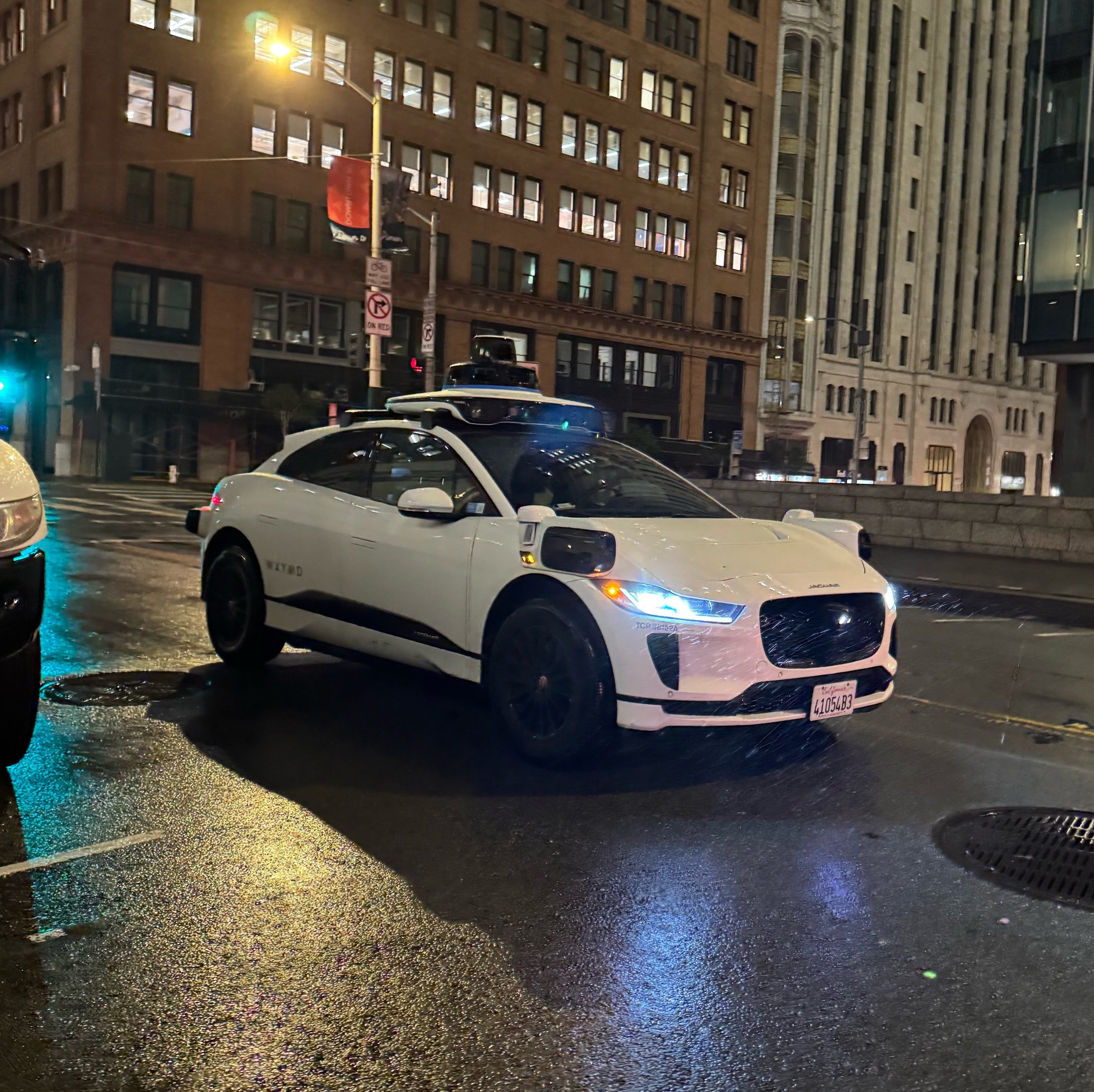
Transit systems need to exist in the real world. And I am growing concerned that the wave of transport disruption unleashed by Uber (which, to be clear, had its positives!) is going to be tiny compared to what we will see from robotaxis. Recently, someone online said something to the effect of “Waymo isn’t able to move significant numbers of people”, but the service is already moving almost half a million a week. That’s only the same as a single moderately-successful American light rail line, but that’s the same as a moderately-successful light rail line — and we are clearly in the early days.
To be clear, as I have said before, I do not think all of public transit is at risk, metros and regional train systems for example should see minimal impact. This is largely because the the investment in the right-of-way and electrical system means not having to worry about other traffic or inconvenient and expensive power delivery — it’s a sort of hard-to-replicate trifecta of capacity, speed, and efficiency; this is something we mostly cannot conceive of creating for cars.
This basically seems like what the “Boring Company” is trying to do, however given they haven’t even been able to get their vehicles to self drive along what amount to grade-separated routes for years suggest they are a very long way from being a threat.
My point here is that I am a fairly paranoid person, and pretty bullish on this technology and I don’t think we need to worry about the subways this century!
Transit is much more than subways though, and I am fairly concerned about any transit that runs on the street — buses and trams, and in places like the US, poorly-operated subway and rail systems. These forms of transit are likely to often be slower, less available, and a worse experience in many cases, and I think their (often overrated) cost advantage may even erode.
Once again, cities in Asia (and parts of Europe) feel wise for building huge subway and regional rail systems that seriously reduce their dependence on buses.
It’s cliche, but the technology as it stands is the worst it will ever be, and remember there are several competitors all vying to win this market. Waymo is rapidly expanding across the US (including to cities with snow, which people foolishly seem to think will be somehow harder to engineer for from where things are now than creating self-driving robotaxi services was from the ground up), and is also set to begin expanding internationally starting with London and Tokyo — two cities with famous and excellent rail systems and also a lot of taxis.
And we have seen this before! Uber was hugely disruptive! Almost anywhere you look, you can find reports of Uber pushing down ridership, sometimes in a big way. And I would expect robotaxis to be even more disruptive, so it seems like a huge mistake to not try to get out ahead of this!
Why do I think they will be more disruptive? Well, because they do everything Uber did and more. Robotaxi services virtually all use fully-electric vehicles, which are better for the environment and shrink the environmental gap — particularly compared to a fossil fuel-powered bus. And long-term, it seems plausible they will be significantly less expensive than Uber as well, both because of the electric architecture, but also because the driver is the most expensive part of the actual Uber service delivery.
At the same time, several of the major issues anyone can see with Uber (and with Taxis) are improved upon with an autonomous vehicle. For one, it’s just less awkward — you are in a vehicle by yourself, can listen to whatever music you want, can take a call without being overheard, and can turn up the air conditioning. Not having a driver who is under the gun to drive fast and the desperate need for robotaxi services to show they are safe means pretty mild driving and a lot of caution, which is not only more secure, but also more relaxing with little in the way of sudden movements. Importantly, at a system level, having no need for a driver also means you can move more actual passengers.
In many ways, I actually think robotaxi services resemble transit. There is no personal engagement with a driver, vehicles are low emissions, movement is controlled and cautious, the vehicle is not going to try to pull a fast one on you by running up a meter, and internal screens feel like wayfinding!
But, the fact that these services are likely to be quite compelling, and over the long run super affordable (once you have the vehicle, you want to be driving around taking people on trips so long as the fare outweighs the minor cost of electricity and mileage). Waymo is currently more expensive than Uber and Lyft in San Francisco, but apparently this is just to control demand — because if people were offered the choice at the same price, they would overwhelmingly pick the driverless car, no doubt largely for the reasons I mentioned above.
So then … how do cities get around this? One person I was talking to suggested that cities (like Toronto — which even has banned electric scooters, which is nuts!) might ban robotaxis. This seems unlikely. Of course, some cities banned Uber, at least for a while, but eventually the public wants access to useful services that people in other cities have access to. Instead, I actually think this ought to just be treated as an accelerant for a lot of obvious policies that should have been happening anyways, and which are particularly relevant in dense urban environments.
For one, there should be less space for cars! Robotaxis are — at the end of the day — just cars without drivers, and so the extent to which they can take over a city really is limited by the extent to which a city is dominated by roads. There is after all a reason why this technology is the most compelling to Americans, because Americans have lots of roads and few transport options.
But, what’s actually amazing about robotaxis is that sort of by design they are good drivers, and in practice the difference between a good rule-following driver and a typical driver in the US, and to a smaller extent Canada is enormous. Speeding, not obeying signs and signals, and doing things like edging into bike lanes or ignoring one way signage on neighbourhood streets are all common with human drivers, but should basically never happen with robotaxis. The fact that signs and lines on the pavement suddenly might be quite strictly adhered to actually makes the value of the stuff much greater. Bus lanes and bike lanes should both be widely-deployed, and bus lanes in particular should be supercharged by fewer and fewer cars on the road not respecting them.
Of course, you also can just have less road space. As the constituent for downtown car lanes is increasingly not voters but instead international corporations, hopefully the popular decision will increasingly be wider sidewalks and even pedestrianization. Parking also will be less important as the expansion of robotaxis — like Uber — probably will push down personal car use, potentially helping supercharge the dominos falling for parking minimums. Of course, this is a double-edged sword, and probably makes the case for more and better defined taxi stands at major destinations, and even just cuts on the curb in busy areas.
This is also probably a good time to double down on rapid transit. With fewer people needing to use a car for virtually all of their travel, we will need more trains and more lines connecting busy areas in a way that cars — driverless or not, just can’t — certainly not at street-level. This would also help transit systems transition to a model that requires more upfront investment, but also reduces the month-to-month operating cost-per-person moved (assuming service levels are actually good).
Transit agencies also desperately need to look at fare policy, again for similar reasons to Uber. Transit and ride services operate on kind of inverse fare policies: Typically with transit, each rider must pay, whereas it’s a sort of step function with a ride service where you are effectively renting the car and driver. This means that while transit is rarely not the most cost effective option when travelling alone, groups of people can tilt the calculus, especially if the rideshare only costs a little more, but is much faster. To some extent, transit agencies (in Canada at least) have begun to implement policies which help here, like free rides for under 12s, who probably aren’t riding for a 9-5 commute and instead use up spare capacity that gets their paying parents onboard on weekends and in midday periods.
But we really ought to go further. In many cities, there are truly a smorgasbord of fare options, from cheaper, short-distance fares for hopping a few blocks on the subway quickly, to a variety of passes, and obviously also group fares, which are particularly relevant here. It also seems like cities that stubbornly refuse to implement distance-based fares should also just ... do that, given increasingly everyone will recognize the reality that going further costs more!
Now, it may surprise you to hear this, albeit a bit less at the end of the piece, but I think we ought to embrace robotaxis, assuming there is rational regulation. That’s because they can’t and will not replace good transit, might create a new incentive for transit agencies to level up, and will ultimately mean more of the drivers on the road are conscientious and respectful, something which is good for everyone!
Cities really screwed up with Uber, because instead of rationally regulating it and focusing efforts on making sure it was a positive thing, they mostly battled to ban it and then mostly eventually ended up leaving things laissez-faire. What should have happened is a measured approach, allowing the service but creating dedicated pick-up and drop-off zones, background checks and the rest — some of this happened later, but it could have been what happened right away.
All of this is important to me, because fundamentally I think these technologies are good for cities. They move more infrastructure out of personal ownership and make living without a private car easier. Most people who don’t have a car will use Uber — and someday a robotaxi some of the time, but most of the time these people can walk, bike, or take transit.
There are certainly some downsides, but considering how many regional rail stations—and even some subway stops—sit in seas of parking with few nearby amenities or housing, I can see this helping with that “last kilometre” or two. It could even help more suburban residents go car-free, since many keep a car mainly to reach the GO station because they’d rather avoid taking the bus.
I'm one of those people who doesn't have a car and uses Uber occasionally. I see Waymos starting to test in Boston and I can't wait for them to go live and scale up. Uber drivers are some of the worst drivers on the road, and will sometimes do things like make you wait half an hour because they want you to cancel so they can get an airport fare.