

Quality Still Matters in Transit.
Bigger is usually but not always better.

This meme — produced by the always classic JR Urbane Network — is one I still find incredibly funny. Toronto struggling to keep the same rail network it had 15 years ago afloat, while Chengdu — a big city in Sichuan that many people have never heard of — has built several Toronto-sized networks, and something significantly larger than the London Underground.


Now, the reality when it comes to transit is that bigger, usually does mean better. I mean, when most people think of amazing transit they do think about places like Tokyo and Paris, where the networks are not only massive but highly redundant.
I've talked about this before, but I think redundancy is a really underrated part of great transit networks. Giving you multiple ways to get from one place to another is important because when you need to shut down for inevitable maintenance, when there are inevitable problems, or when you want to reroute people because of an event or something, having redundancy is what allows you to do that. So the biggest and best transit networks tend to have redundancy, and that means that not only do you get an incredible reach of transit in terms of literal places, but the sort of consistent availability of transit to go to said places is also expanded.
And of course, even smaller cities can provide some redundancy, because at the end of the day you still have streets and roads and can run buses, but that sort of decline in quality from a train to a bus is the sort of thing you try to avoid. The best transit networks aren't really best because they provide a single static thing, but instead because they provide a sort of hierarchy of usable infrastructure that can flex over time and with changing demand and provide the best possible experience for as much of the time as possible.
Of course, like in all things, there are exceptions — New York comes to mind as a subway system that feels rather run down and that clearly needs absolute transformation, if it's to meet the standards of the city it serves. Especially when you consider that there are lots of similarly old subway systems like London, Madrid, and Berlin, which are in much better condition. That being said, it's also pretty obvious that despite New York's shortcomings that it's also the best system in the US and it's the biggest system in the US so clearly this rule does hold quite consistently. Bigger systems do really tend to feel better — perhaps because when you put aside quality-of-life, they do get you to lots of places lots of the time (New York more than most).
Don’t miss a single post. Become a subscriber today for the latest on transport in Toronto, Canada, and beyond.
But while largeness often does correlate with some basic level of quality, what isn't the case is that small systems are universally bad. In fact, I think that we under-appreciate small-large transit systems (smaller cities or systems, at least relative to the multi-hundred station ten million-plus urban area cases we often talk about). In some ways, we inhibit ourselves from having a lot more good transit because we have this false belief that if a transit system is smaller it can't necessarily be great. In particular, the Anglo world — which ought to fix its near total inability to build for rational prices — need not feel that its cities are doomed to be in a different tier from the sort of cities people like to travel to on European holidays.
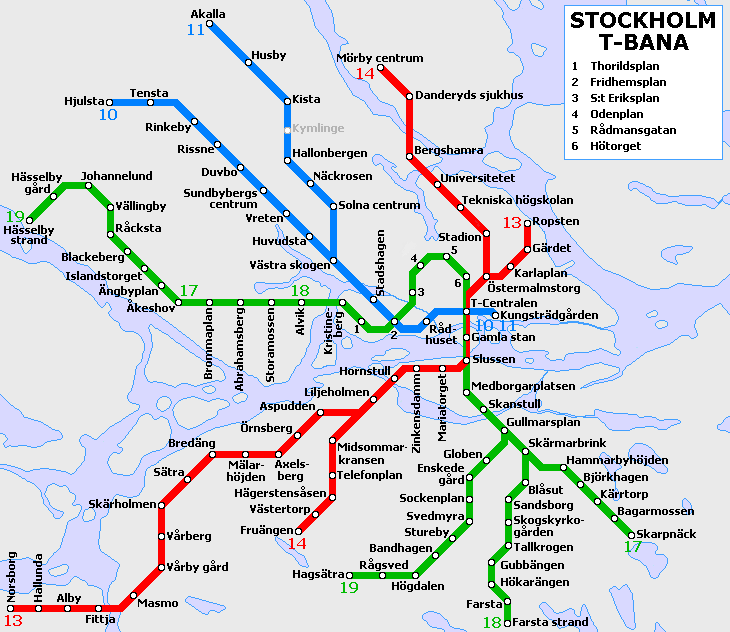
Take for example Stockholm with its T-bana system. Stockholm is frequently acclaimed as having one of the best transportation systems in the world, but the T-bana isn't so much larger than the mass transit systems of many North American cities, which often get far less respect — for example San Francisco, Boston or Toronto.
It's true that these cities really are more comparable in terms of significance and population to the larger cities out there like Madrid or Berlin or perhaps even London — But I think it's wrong to assume that transportation scale needs to be identical across the Atlantic. It really is the case that North American cities have astronomically larger road networks. And these road networks can move a lot of traffic including public transport traffic!
I really don't think that these cities would need to have transport networks the size of Madrid. To qualify as having good public transport, aiming for Stockholm levels would still mean that they're pretty good — definitely in the top percentiles internationally. And that's because ultimately what makes it transportation system good is less at scale, but it's ability to connect to important places and cities only have so many important places.
Sure, do I think that Boston or Toronto need to grow their Subway networks? Absolutely, but maybe more like 20% rather than 200%. There are a few key destinations which are disconnected and which are egregiously disconnected, but many places could be served with other modes of public transportation. Astute viewers might point out that Stockholm isn't just limited to its metro —system, but it actually doesn't have so much of any of the other transport modes either. There is a throug- running regional-suburban railway system which is quite impressive, but it only has a couple of lines; there are interurban trains which terminate near the core of the city, but these also are not such massive lines. Stockholm has trams too but, only a handful of lines. The point I'm making here is that all of what Stockholm has is in the achievable range for the North American cities I’ve mentioned (and I guess some other European ones) and probably even today if more funding was available, much less if you actually sorted out all of the construction cost issues we have. In fact, I'd actually argue that Toronto is pretty much on the trajectory to get there with our big new subway build.
A lot of this comes down to fine details of the transportation system that aren't just a bigger subway network. I'm going to write an entire future post on that, so make sure you're subscribed so you don't miss it. It should be the next one in queue.
I think a big part of the problem that leads to people thinking the thing that matters most is what your subway map looks like is that that's the kind of thing that does well on Reddit (as you can see at the top of the post). But, I think in reality the things people experience using a system are really the cleanliness and modernity of the stations, whether people are throwing trash on the ground, the level of service frequency, the ticket and fare options and general ease of use. Basically none of these are dependent on having a massive network.
Obviously a smaller system in a bigger city is going to have problems if it becomes very successful, you'll have congestion and potentially the issue of having under-built your infrastructure. But, these are problems that again and again, I try to remind people are kind of good to have. It's much better to have a system that's well used and under pressure than one that's completely deserted for much of the day and the week. The latter case is what many American transit systems currently face: they aren't necessarily insubstantial, but because they lack ridership they lack the political constituency or even the practical constituency to justify massive investments and energy expenditures in improving the system.
Madrid rather famously has subway lines with extremely small trains and they mostly are alright. In the case that a line becomes insufferably busy, you can actually extend platforms or build new parallel lines. I've argued in the past that a model of transit building where you add a new line every couple of years is probably a healthier place than one where you do it every couple of decades because it keeps the institutional capacity to build new infrastructure alive and well.
And you need not only look at European cities, I pretty regularly try to bring Hong Kong up with people as a system that actually isn't all that large but is famously extremely good. Now the MTR does have over 200 km of track length. But it has less than 100 stations which means that several American cities including Chicago and even LA actually have more.
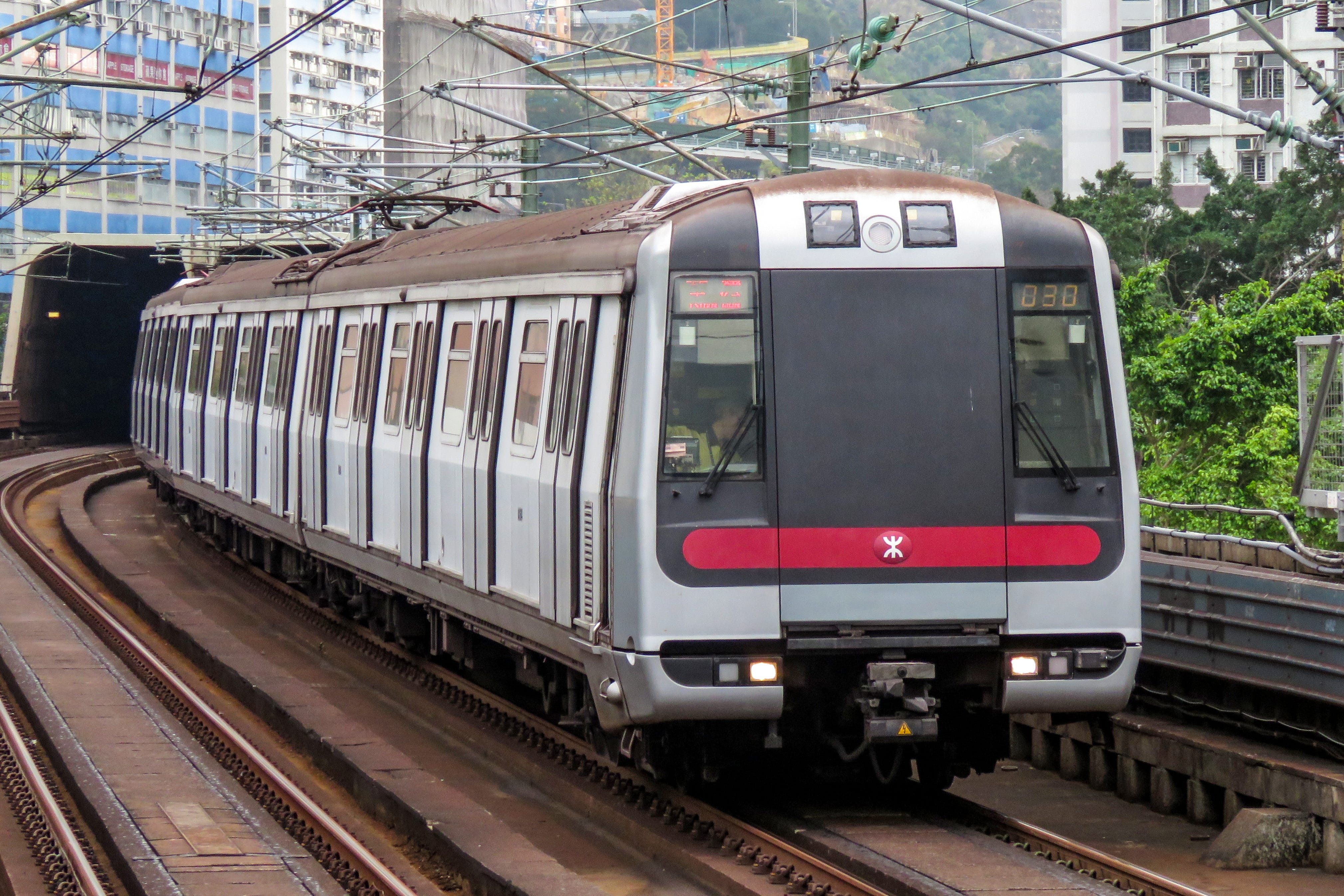
The fact that it almost sounds absurd to compare the Hong Kong MTR to the Chicago ‘L’ or LA Metro Rail is the whole point. There's this massive gap in quality, which can be bridged to some extent, but only if serious and concerted effort is made. Of course to some extent it's hard to bridge a gap, when in large part the gap pertains to planning and network design. Los Angeles doesn't have rail to many of the biggest trip generators in the region and in some cases doesn't even have plans to build it, a city like Toronto, or Boston with a smaller network, but great connectivity is a lot better set up to graduate to the quality of Hong Kong or Stockholm.
Now, I can already hear friends in Hong Kong mentioning that the MTR is in a kind of relative decline and is suffering from the cost disease that prevents systems in. English-speaking places elsewhere from building much new infrastructure. But, at the end of the day, it's still the MTR. It's still an excellent system that's highly connective and which most cities in the world would happily trade for. The reality is that while Hong Kong could maybe benefit from a couple of new rail lines. It currently survives without them and thrive is probably more appropriate word. You can always have more and more is always nice. But Hong Kong for what it has is absolutely fantastic and if the world (and North America in particular) could add 5 or 10 new Hong Kongs or Stockholms, public transport and all kinds of things would be in a much better place.
Sitting down for hours each week to keep in the loop, research and write about transport takes a lot of time. This blog lives and dies by your support.
Thank you.
To a certain extent, comparing an MTR station to any station in North America seems a bit apples to oranges. Look at the TST station. It’s gigantic. TTC or El stations, not so much.
One point re: number of Metro stations in Hong Kong
The geographic footprint of the city, combined with its extremely concentrated population, make comparing the total number of stations a bit misleading.
The population catchment for any particular station is likely much higher than most you’d find elsewhere.
But, where the MTR doesn’t go, the buses most certainly do … including to some of the smaller, more remote villages like Tai O on Lantau Island