

Is riding the subway like smoking a pack of cigarettes?
Is the air down there safe, anywhere?

Air quality on many of the world’s subways is poor, but that matters less than you might think; there is also a lot we can do about it.
Air quality really is a near universal problem on subway systems. Looking and where and why its bad can help us understand the problem, and potential solutions.
One of the more concerning things we have heard is that riding the London Underground is like smoking. Claims vary on how much smoking, but that does not sound good: After all, grandma, schoolchildren, and actual smokers, as well as regular healthy adults ride the London Underground and subway systems around the world every day.
Recently, the conversation was sparked again when an observer across the Atlantic suggested that …
“subway air is slowly killing NYC”.


Of course the reality isn't anywhere as hyperbolic as the tweet (honestly just generally true about most tweets). While the air quality in the New York City Subway could legitimately stand to be much better, New Yorkers pretty widely used the subway and live longer than the average American. The truth is, we all are exposed to things that aren't particularly healthy for us every single day, and our bodies generally handle this stuff with ease. What's more significant for cities is just how much better healthcare is, and how much more wealth exists in them.
Two Tales
In reality, subway air quality really exists in two separate dimensions: that of the individual, and that of the city writ large.
The simple reality for the individual is that most subway stations in the world which lack sealed tracks and tunnels thanks to modern platform screen door implementations (see last week’s article for more on such systems) will feature measurable, and often significant platform air pollution with fine particulate matter — tiny particles suspended in the air. Studies have found this in cities from Helsinki to Toronto and London to New York and Paris. Particles come off of brakes, wheels, and rails, and become suspended in the air, and this effect is made much worse when trains operate at high frequencies during peak periods.
This is obviously not a good thing — that’s a major selling point to public transit. However, it is less a big deal than it might seem, and context is important.
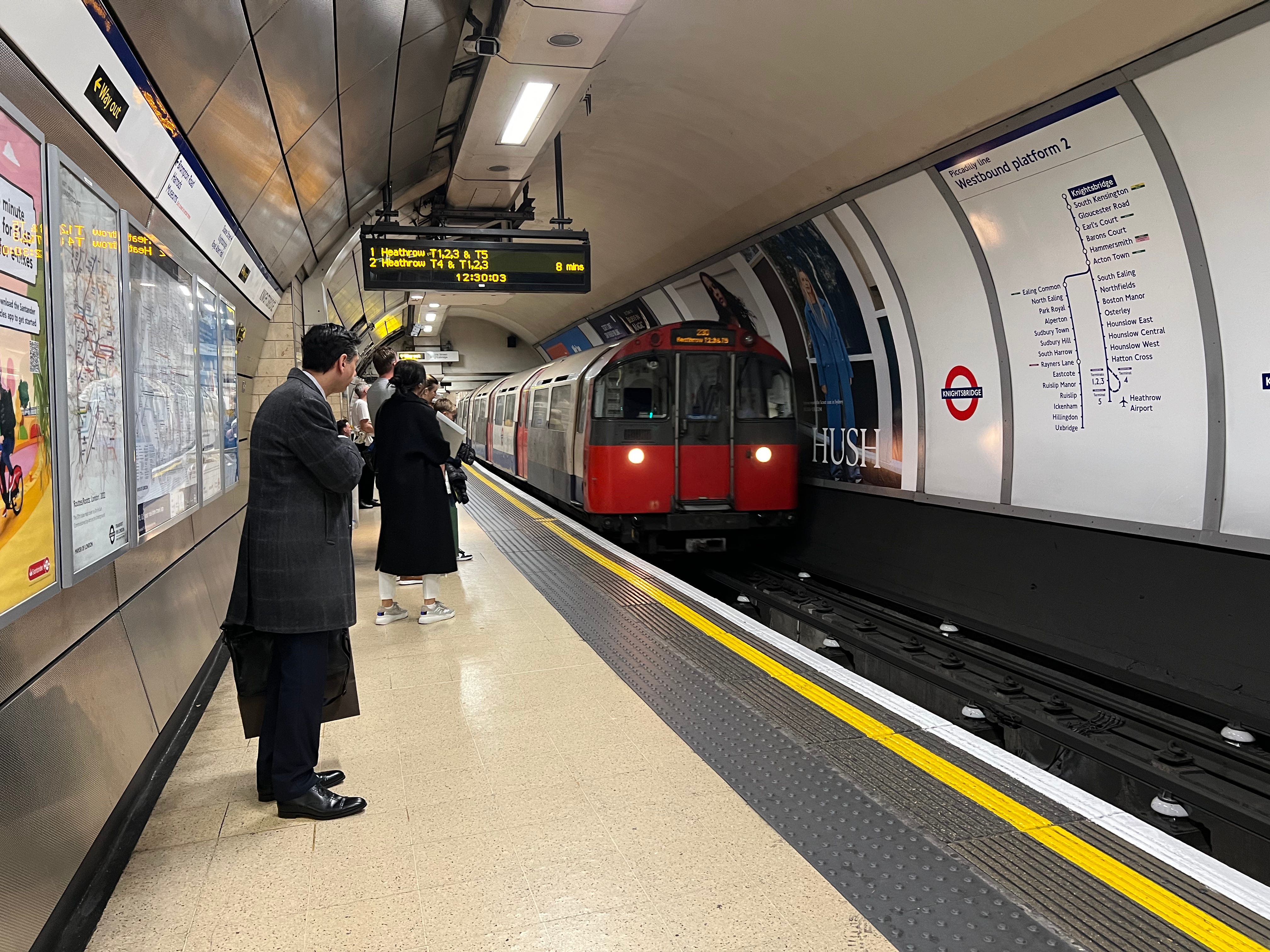
While the amount of particulate pollution on subway platforms ranges from totally acceptable in places like Singapore where modern screen doors are used, to admittedly pretty bad in some very busy deep stations on the London Underground, the reality of how people use these systems is similar. A passenger enters a station, waits on a platform for a few minutes, and then gets on a train; they then get off at a station at the other end. The amount of time spent in stations for most commuters is likely under 20 minutes per day.
Subway trains are actually where commuters spend much more of their time, and while not perfect, air quality on the latest trains is ofter significantly better than on station platforms. This is because trains feature powerful HVAC systems which pull cabin air through filters cleaning it. New subway models in many cities are spec’d with higher-quality air filters in part because we know subway system air quality is poor.
Overall system air quality has also often improved over time, as regenerative braking and smoother acceleration and braking curves brought by automatic operation all work to minimize wear. In Toronto’s case, using modern trains has cut station air pollution in half. And pollution level on trains, even without the most modern HVAC technology, is a fraction of those lower platform levels and while not particularly great also probably not a big deal.
It’s important to recognize the reality that people are exposed to varying levels of air pollution every single day. For the commuter, this means while you may spend a few minutes per day in genuinely poor air quality on a subway platform, the average air quality of your commute is unlikely to be particularly bad, and the average air quality of your day is probably mostly not affected.
So then, while subway air quality is often poor, the impacts of that on commuters is heavily mitigated by how these systems are actually used — few people hang out underground for longer than they need to, and those who do may be reading this article; don’t do that! — as well as by technological changes.
Because people are exposed to all kinds of air pollution every single day, the impact that a small amount of time in poor air quality on the subway has on people is probably fairly limited.
For Cities
The first mistake people make when freaking people out about subways is ignoring the reality that people need to go places. Obviously cycling and walking do not release significant air pollution, but these modes of transportation are never going to work for everybody particularly in our largest cities. You simply cannot have a large city, where people regularly mix and mingle across social and professional lines, where people don't travel distances that require mechanized transport.
And so then looking at a polluted subway in a vacuum makes no sense, you must compare it to the alternative and in most cases the alternative is much worse. Even when you look at other public transportation options, diesel trains or buses are going to emit significantly more pollution, and yet even these modes of transportation will emit far less pollution per passenger transported than private automobiles.
Don’t miss a single post. Become a subscriber today for the latest on public transport in Canada, and beyond.
It's also important to make clear that the actual amount of pollution coming off of an electric train is miniscule. The reason subway air quality is bad is not because subways produce tons of pollution, but that most subway systems have a lot of tunnels and particularly in older systems these are often quite poorly ventilated. It's worth noting that even famous subway systems like London and New York spend much of their track length above ground — London is more than half above ground — where pollution is rapidly dispersed and a much smaller factor.
By comparison, road transport is so hideously polluting that there are serious deleterious health effects to spending time around even semi-major roadways, and this is despite the vast majority of roads (unlike subways) being above the ground. Ironically, that someone can step out of a polluted subway station and onto a street with much better air quality is something which is only possible because of the subway running beneath the street. Cities without that type of rail rapid transit are dependent on far more polluting alternatives.
In this context then, the alternative to a transportation system built around subways, where passengers may briefly experience rather bad air quality in their use of said system, is still significantly better for the overall air quality of a city than road-based transport. And because subways are so high-capacity, each can replace tens of lanes of arterial traffic that permanently expose residents and workers along them to unhealthy air.
So then, subways are (for what are obvious reasons) significantly better for overall urban air quality, even if the price of this is small amounts of exposure for their users to poor air quality. Looking at the macro, it seems that the benefits as evidenced by cities generally exceeding national average life expectancies, significantly outweigh the costs.
Keep reading with a 7-day free trial
Subscribe to The Transit Brief to keep reading this post and get 7 days of free access to the full post archives.