

Will New Technology Make High-Speed Rail Obsolete?
Do new technologies undermine the case for fast trains?

Much debate is happening around high-speed rail in Canada, and while arguments against may appear compelling, they are grounded on a misunderstanding of the actual state of technology, and on what high-speed rail provides.
Countries around the world need to have these discussions, not only so they can decide whether to embark on building high-speed rail at all, but also so that they can make judgements on expanding existing systems — something happening in most places with existing high-speed railways.
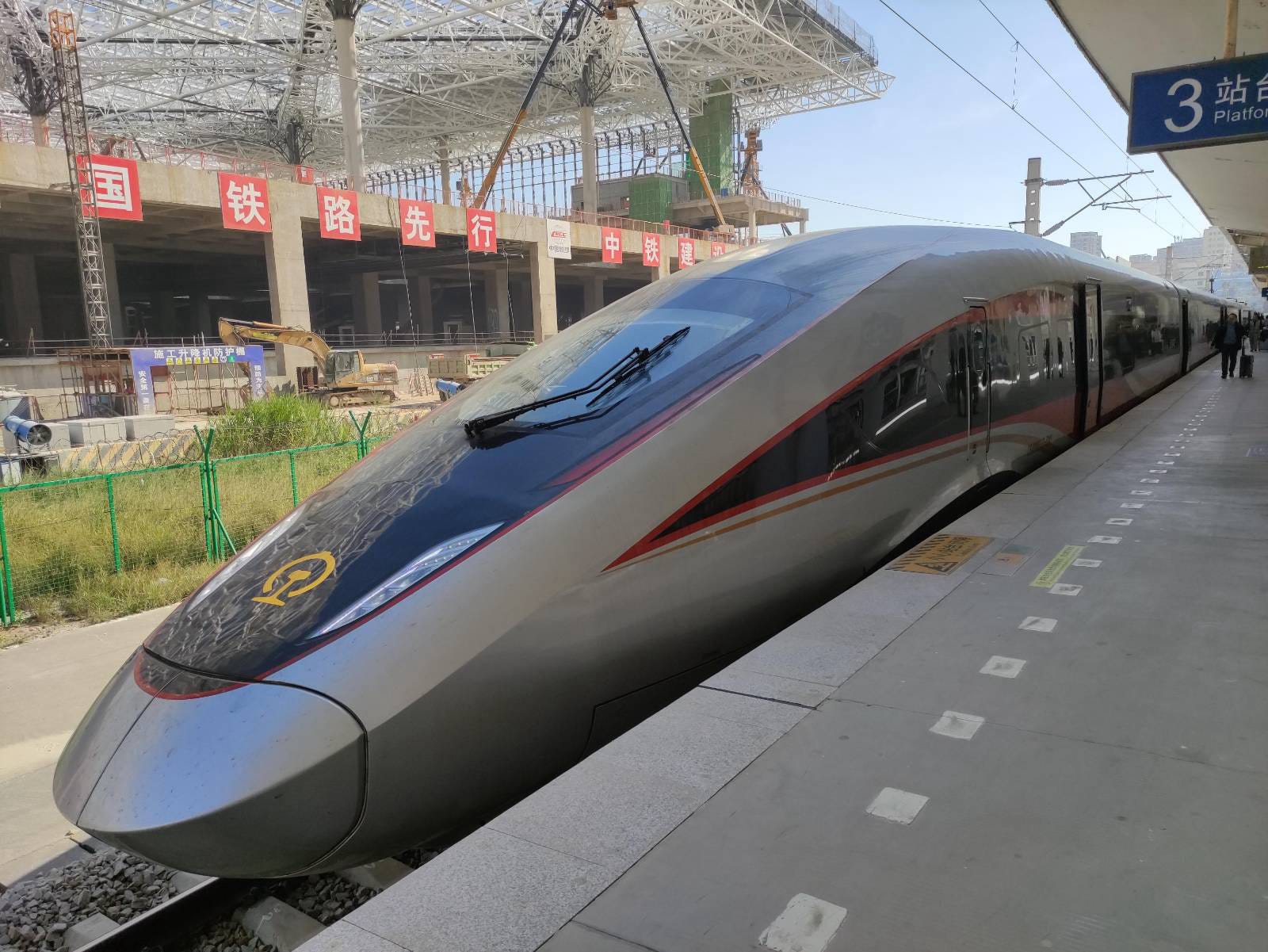
Even though most developed countries, and increasing numbers of developing nations like Indonesia and Morocco have built such systems. These debates — while frustrating — are important to have, and The Transit Brief encourages them, so long as a shared understanding of the ground truth exists, and interlocutors can remain civil.
We at The Transit Brief think that numerous wealthy nations, which we could hopefully presume are not all run by incompetent politicians and planners, choosing a technology semi-independently should be seen as a significant vote of confidence in it. However, it is the case that technology changes and asking whether conditions have changed before embarking on a legitimately massive nation-building scheme.
The discussion has heated up in the last few days as the Canadian Federal Government’s dashing of dreams around an expansion of the rather unique regional airport in Lake Ontario near downtown Toronto has spurred shots across the bow of the Alto high-speed rail project. The expansion would have largely consisted of a lengthened runway capable of supporting larger aircraft. The relationship here is important — 40% the airport’s flights are to Montreal or Ottawa, prime high-speed rail territory.
The case for business cases is not nonexistent, but we do question to what extent the “business case” for a piece of transportation infrastructure must be reproven in nation after nation when the fundamental geography or available technology has not changed, but also how the “business case” for a city centre airport — the sort of which cities have been removing for decades — from Chicago to Hong Kong, is so clearly strong.


The “Debate”
The natural question when building a big piece of infrastructure is whether it is a good plan — whether the case, “business” or otherwise, is good. This is a responsible question to ask and is how you avoid starting a video rental business two years before Netflix appears on the scene.
With high-speed rail, the “alternatives” we most often hear about are either flights, or looking forward, autonomous vehicles — perhaps even of the flying variety.
Don’t miss a single post. Become a subscriber today for the latest on public transport in Canada, and beyond.
Planes
It makes at least some sense that flights get presented as an “alternative” for high-speed rail by uninformed commentators, because you do frequently hear of flights being curtailed because of high-speed rail availability. The directionality of this policy seems important — flights are being rendered obsolete, not the other way around, but even still it does highlight the overlap in the market for these technologies.
The markets do overlap, but the case is that high-speed rail is specialized for shorter trips and flights for longer — often intercontiental — ones. There are a number of reasons for this.
For one, a longer trip can “absorb” a lot of costs. Fuel-hungry takeoff and landing and the fees associated with them at airports are required no matter the distance of a flight. Spending significant time to go to an airport, which is generally far from the city centre (and essentially always far from the city centre for the large aircraft used on the longest flight) is more tolerable when it is a much smaller percentage of the overall travel time. For a 1 hour flight, a 45 minute trip to and from the gate on either side — which is optimistic — means a ratio of 1:1.5 of flying to getting to and from the flight, whereas a 10-hour flight with 2 hours on either end (probably more like 3 upfront and 1 when one lands) is a ratio of 1:0.4 — over three times better.
Air and rail travel also have fundamentally different economics. The biggest cost for air travel is fuel, which as we have recently seen can swing wildly in its price, but also a large aircrew. Rail travel has a smaller crew, a much higher capacity per vehicle, and is overwhelmingly powered by electricity for which the market is not global. The travel dynamics are different too: A flight from Montreal to Toronto serves people travelling from Montreal to Toronto, but a train can stop along the way with minimal cost and serve far more unique journeys with a small marginal cost.
An attempt to argue that for the price of high-speed rail you could give people free flights forever falls apart because of these differences.

Even if one assume- the numbers are correct, the maintenance costs presented appear to be off by an order of magnitude, close to those for the highest use high-speed rail route in the world rather than a lighter route in Canada — but then they fall apart because the return on investment and what is considered “in-scope” is completely different. Aviation infrastructure would be needed even if not for mass commercial passenger transport, and so piggybacking is a real thing, but this doesn’t make the case for trains weaker, just different.
You cannot compare the cost of building and operating a new high-speed railway with the cost of buying plane tickets. It may be an interesting exercise, but little more.
For one, the cost stated for high-speed rail is the whole system cost, or much closer to it than for buying plane tickets. It covers the rails, trains, and operations and maintenance. Plane tickets aren’t covering the creation or full maintenance of the aviation system, even with our rather unique airport model in Canada.
At the same time, the comparison misses that flights are not equivalent to rail journeys. High-speed rail can connect cities with higher frequency and capacity, while directly serving city centres. The availability of service, convenient siting of stations and low cost of operation induce demand that does not and will never materialize for flights on the same route. You cannot judge the need for a bridge by the number of people swimming.
The comparison does not only favour high-speed rail, planes for example also carry significant cargo — very rare to nonexistent on high-speed rail (though possibly changing in China), another reason why the comparison is ultimately apples and oranges.

The case for high-speed rail just is not undermined by the fact that you could use the same money to buy tickets for a different transportation system. It’s not unlike arguing that one could buy a house, or lease a commercial office with the same capital. Air travel exists in virtually all of the same markets as high-speed rail (one regular reader notes that rail takes nearly the entire market for travel from Tokyo to Osaka, but is weaker on the longer trips to Fukuoka or Hakodate), and serves a different role. It may be helpful to point out that the modern airliner actually came predating the high-speed train.
Waymo — Autonomous Vehicles (AVs)
The other “alternative” we hear about time and again is autonomous cars: why not just hop in, press a button, and sleep, work, watch a film, or game, while your car takes you not only to you destination city, but your actual final address?
It’s helpful we think to ground this discussion in reality, and the reality is that while tens of thousands of kilometres of high-speed rail — serving billions of annual trips — exist in commercial service, autonomous intercity cars exist in commercial service … nowhere.
That’s not to say that they won’t. Waymo exists in a handful of cities, and in a subset of cities it will even take you on an expressway. But, Waymo doesn’t exist anywhere in Canada at the moment, and has various challenges to overcome just to scale its urban service (cleaning, demand management, vehicle costs, congestion) — which despite its success carries a fraction as many people as the middling public transit in the markets where it operates.
That intercity autonomous vehicle travel is technically possible is obvious and it probably will happen eventually, but actually delivering it, much less at the scale needed to come anywhere close to the capacity of high-speed rail is not something that has been done in Silicon Valley or anywhere else.
Don’t miss a single post. Become a subscriber today for the latest on public transport in Canada, and beyond.
Suggesting that this will come sooner than high-speed rail — remember Google has had good self-driving cars for over a decade — which has been delivered commercially in loads of places, frequently in less than a decade, requires either extreme cynicism,or the type of hubris that even tech people find grating (your author holds a degree in Computer Science). The comparison is between knowns, and some known unknowns, but mostly unknown unknowns, and is not serious. It’s another flavour of Hyperloop, which by chance also still does not exist — and to be fair is frankly less likely to ever exist than intercity driverless car travel.
Of course, suspending all disbelief — as one rarely does when the goal is delivering a real piece of infrastructure people can use — leads to an interesting conversation.
Clearly if one could just get into their car and have it them take wherever they wanted it would be a revolutionary technology; we clearly are getting closer to that being possible each year. However, the market for this might not actually be growing much, particularly in Canada.
In this country, and in particular along the Toronto-to-Montreal corridor, public policy is focused on more rapid urban transit, and more homes and businesses near this new transit, and existing subways and regional rail, and actively discouraging car use.
To explain how this shrinks the market, consider the geometry: while getting into your own car in the garage of your suburban home, and being taken down quiet streets to a major highway before zooming to you destination sounds great, this is unlikely to be how many Canadians live. Most housing built in our biggest regions is now apartments. For residents here, car ownership is increasingly not seen as a positive. That means using an AV means getting into a high-tech Uber, and we question whether the smell of over strong air “freshener” and dirty seats would be bearable for 3 or 5 hours.
At the same time, transit-oriented development puts trains on a much better footing. The car is no longer just a door away from your kitchen, and the subway might just mean taking the elevator a few extra floors down, or a 5 minute walk.
The point is that self-driving cars are obviously compelling, but that they also aren’t obviously better than good public transport — which is structurally better at being used en-masse. It’s not clear to us that an aspirational city like Hong Kong with a near-ideal mass transit system will see much change at all by taking the driver out of taxis. AVs may be more compelling in a city like Houston, but ironically for those who decry the high spending on subways that makes a place like Hong Kong possible, it seems likely that in the long run it will be Houston with the dramatically more capital-hungry maintenance-intensive transport system.
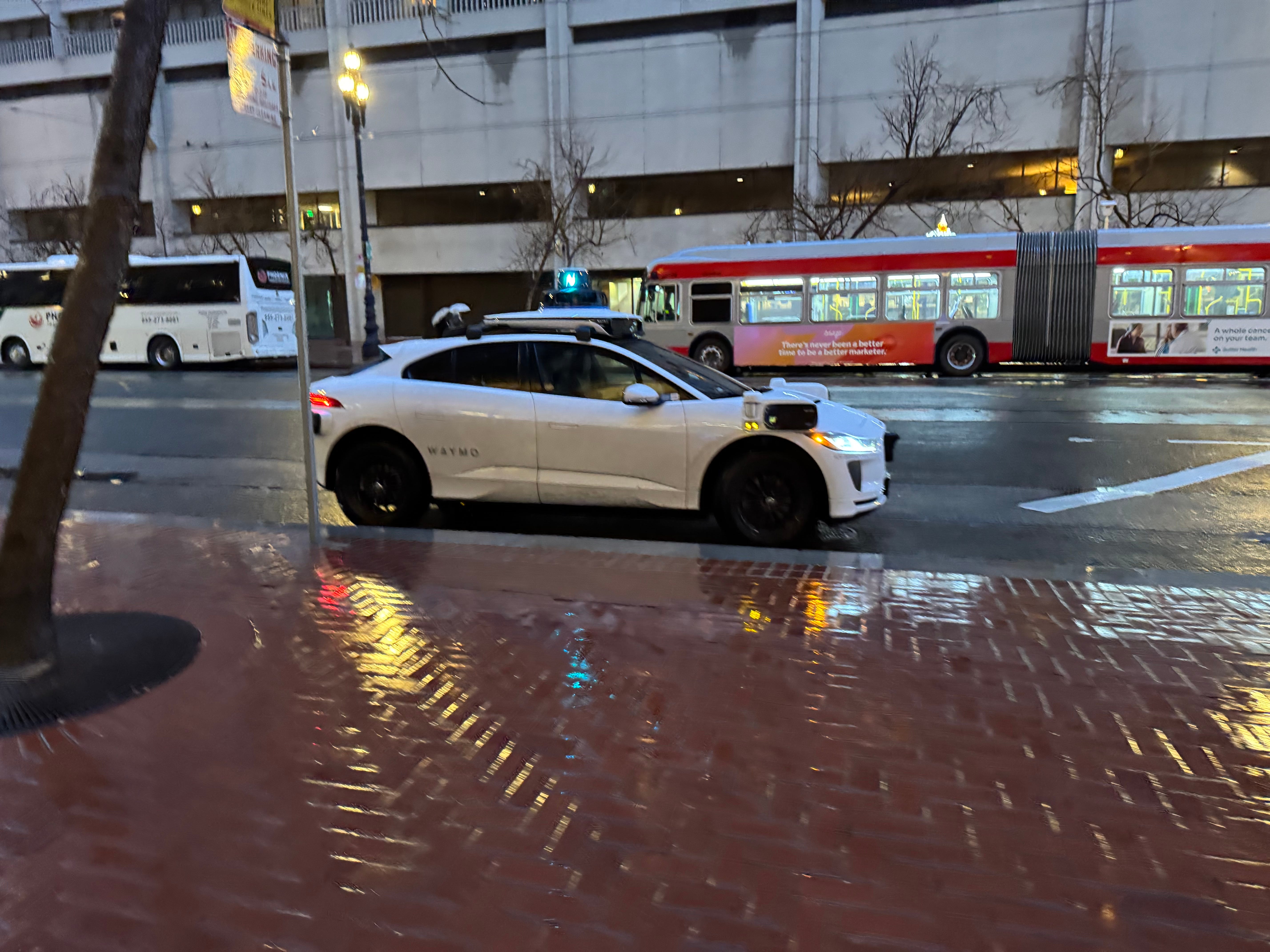
So then, autonomous cars will be an amazing technology, but in large part for places that people don’t love — and that in Canada planning policy is actively trying to move away from.
Assuming one did hop in their car for a weekend trip to Montreal, there is another issue with the car: When we arrive in Montreal, a city defined by walkability with an impressive cycle-track network and metro, you do not want to be encumbered by a car — A car which must be parked and paid for, might get broken into, and which is more or less unnecessary, if not actively worse for getting around. The nice thing about taking a train is that once you are off it, parking it is not your problem.
So then, the real market for autonomous intercity car travel is really suburb-to-suburb, transit-desert to transit-desert, increasingly marginal places to the extent that all manner of widely held policy goals are achieved.
And then there is the problem of capacity.
While high-speed rail can move huge numbers of people, highways with private cars cannot. Sometime far in the future, after we have intercity capable AV options they may be able to communicate and coordinate with one another to boost capacity using platoons and other techniques, changes to infrastructure will help more. The issue is, advanced digital traffic management and signalling already exist for high-speed rail, remember that we have been automating subways for decades. The ultimate bound is still that automated vehicles are less efficient at moving people and using space than trains. This means that if we were to manage to overcome the technical hurdles to intercity AVs that congestion would likely just become the bounding factor, and if it comes down to building an 18-lane wide highway from Toronto to Montreal, NIMBYism towards high-speed rail will look like child’s play.
Meanwhile, high-speed rail construction is meant to start in about three years.
Even in the likely future where AVs are a major part of the mobility mix, to the extent we are successful in building walkable transit oriented cities that are quite broadly loved, their use cases will likely be somewhat marginal.
To bring it back to Hong Kong, that city suggests to us — along with perhaps Amsterdam, Singapore and Copenhagen — that urban transportation is a solved problem. While a car without a driver is neat, it’s not entirely clear what substantive benefits it would bring to places with already great transportation, that by no accident do not heavily rely on private cars.
eVTOL
But, driverless cars are not the only new technology “alternative” that high-speed rail needs to watch out for.
A former candidate for Prime Minister, and leader of the pragmatic, business-oriented Conservative Party thinks one such alternative may be: electric pilotless robo-helicopters (eVTOLs or electric vertical take-off and landing).


Questions about what such perspectives mean for the Conservatives were explored in greater depth in this recent article for Canadian Civil.
What’s immediately confusing about this is that if said technology really were “on the horizon”, then the business case, stated above by the former candidate, for the airport (Billy Bishop) expansion is surely in the proverbial toilet: After all, you don’t need a runway for a helicopter. And yet …
Keep reading with a 7-day free trial
Subscribe to The Transit Brief to keep reading this post and get 7 days of free access to the full post archives.