

Global Top 10 in 20 years.
A rough vision for Toronto.

I think the most fair criticism for me to make of Toronto is that it's not living up to its potential.
People are unfair in both directions. On one hand, it is the case that Toronto has a lot of head scratching problems: the lack of any serious road pricing, the unreasonable blowback to bike lanes in central areas, but also somewhat poorly-developed suburban road infrastructure (I'm talking quality not quantity here). On the other hand, Toronto is just honestly quite good by North American standards, which are ultimately the standards that we probably should be comparing ourselves to because the reality of this continent is that it exists within a different context than Europe or Asia. When you sort of do a pound-for-pound comparison, Toronto looks incredibly favourable when compared to a city like Los Angeles or Chicago despite being a much less affluent city and having less of a legacy of growth.
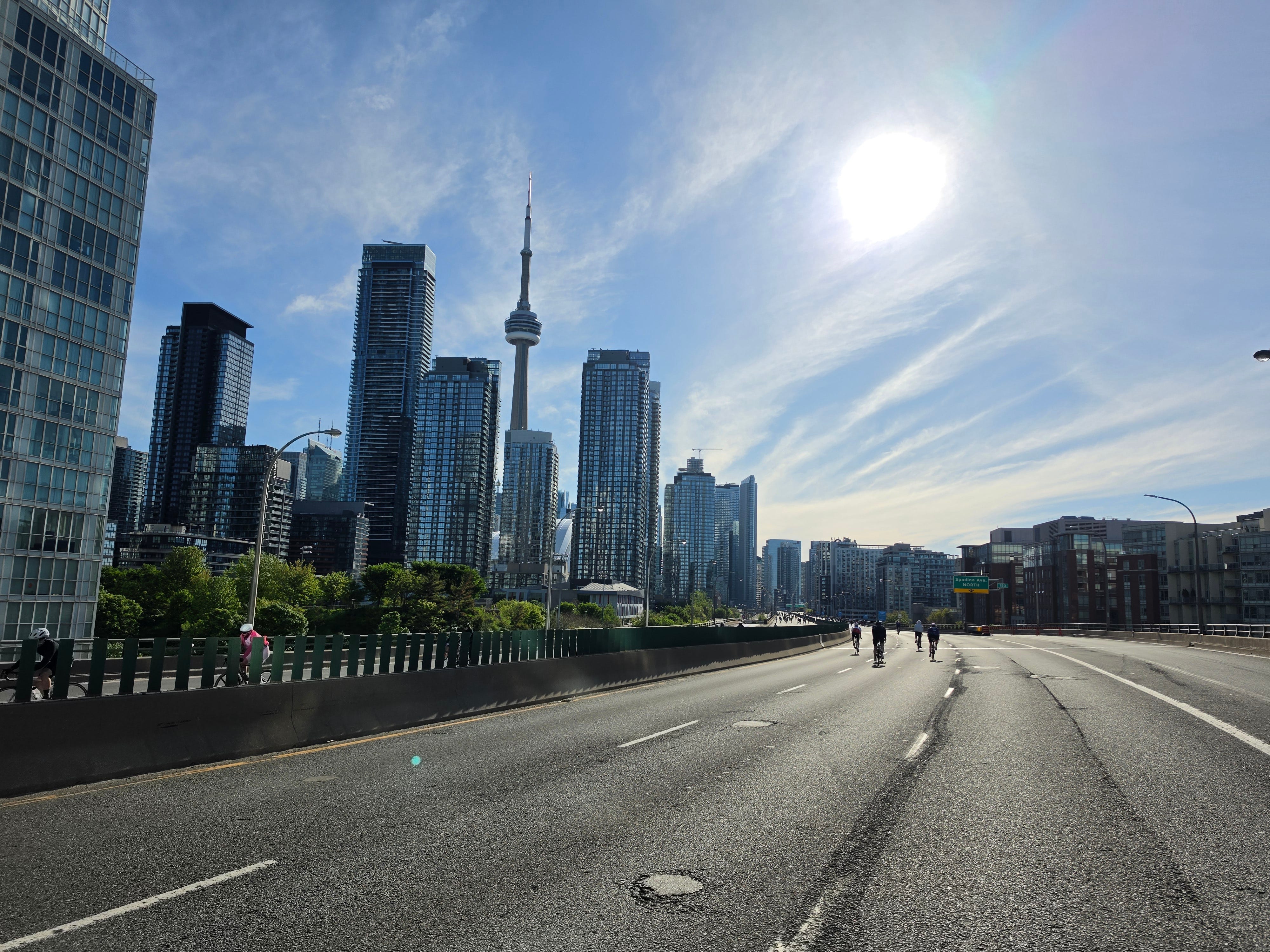
But I don't want to focus too much on other places, I want to focus on something that I was inspired to consider after a lecture last week — what if moving around Toronto was just universally excellent? What if getting here from around the world and going downtown and moving goods and seeing your friends and getting to work was just completely painless and even joyful? It's clearly just not the case that that's the experience today, even if I think we're closer to that than many people appreciate.
As it stands today, the GTHA has a comprehensive highway network that relative to the large cities of the United States does not scar the central city in the same way while also providing access to the central city — more Tokyo than London. Unlike other elements of our own transportation system, it also travels seamlessly across municipal lines. It's not excellent though because it's so often painfully congested and so travel times are incredibly inconsistent, not to mention the fact that the infrastructure isn't used to its highest and best purpose and just isn't generally super nice. I was recently using the highway system and a Google Maps travel time prediction actually told me that it usually takes somewhere between 50 minutes and 2 hours and 10 minutes to make a journey — that is complete madness!
And then there is the active transport network. We have some completely wonderful bike corridors from along the waterfront to various ravine trails, and we're increasingly seeing nice bike lanes. However, taking any space on the road for anything besides cars is seen as an atrocity here, and people are far too used to being able to drive everywhere even if it's a terrible experience; the city and especially the region does not have enough conversations about how driving just doesn't make a lot of sense for a lot of journeys and it's surprising how often people will totally ignore a far superior transit option because driving is just the thing that they do by habit. The walking experience in Toronto is actually surprisingly good and deeply underrated. Short cycle times within the city itself mean that you can walk great distances without having to sit at a lot of traffic lights; this is something you immediately appreciate when you cross a municipal boundary and need to start pressing the crossing button at every intersection and often waiting minutes to cross the street. It is of course also the case that walking isn't often a joyous experience: too often sidewalks look like highways down the middle of wide fields stretching between gargantuan thoroughfares and setback development. And in the Central city where there is a lot of interesting stuff to look at sidewalks are often far too narrow.
I get the people are often most intimately aware with the problems in the place they live and often enjoy piling on, but as someone who's been to major cities in most Canadian provinces and US states as well as in Mexico, I can tell you quite seriously that we have it very good relative to other major cities on this continent.
But I think what's more important is that we could have it similarly good to Singapore or Stockholm or one of those great global cities that people here dream of living in. I would ask instead why we don't simply make our city that good, because I really don't think it need be that hard and I think it's absolutely doable before the year 2050 — which perhaps sounds like a long time but really isn't in the scale of modern developed-world urban development and infrastructure.
Now, this document isn't meant to be a detailed plan, but what it is is an outline of what I think needs to happen to get us there. Of course all of this requires political will, but what would have a bigger payoff then taking us from where we are today to a region with the world-class transportation system that could go toe to toe with the best — fixing the mess of housing perhaps, but I don't see that as entirely separate from fixing our transportation problems. So often the issue we face is that our unified region really doesn't act like one because it just takes too long to travel from place to place.
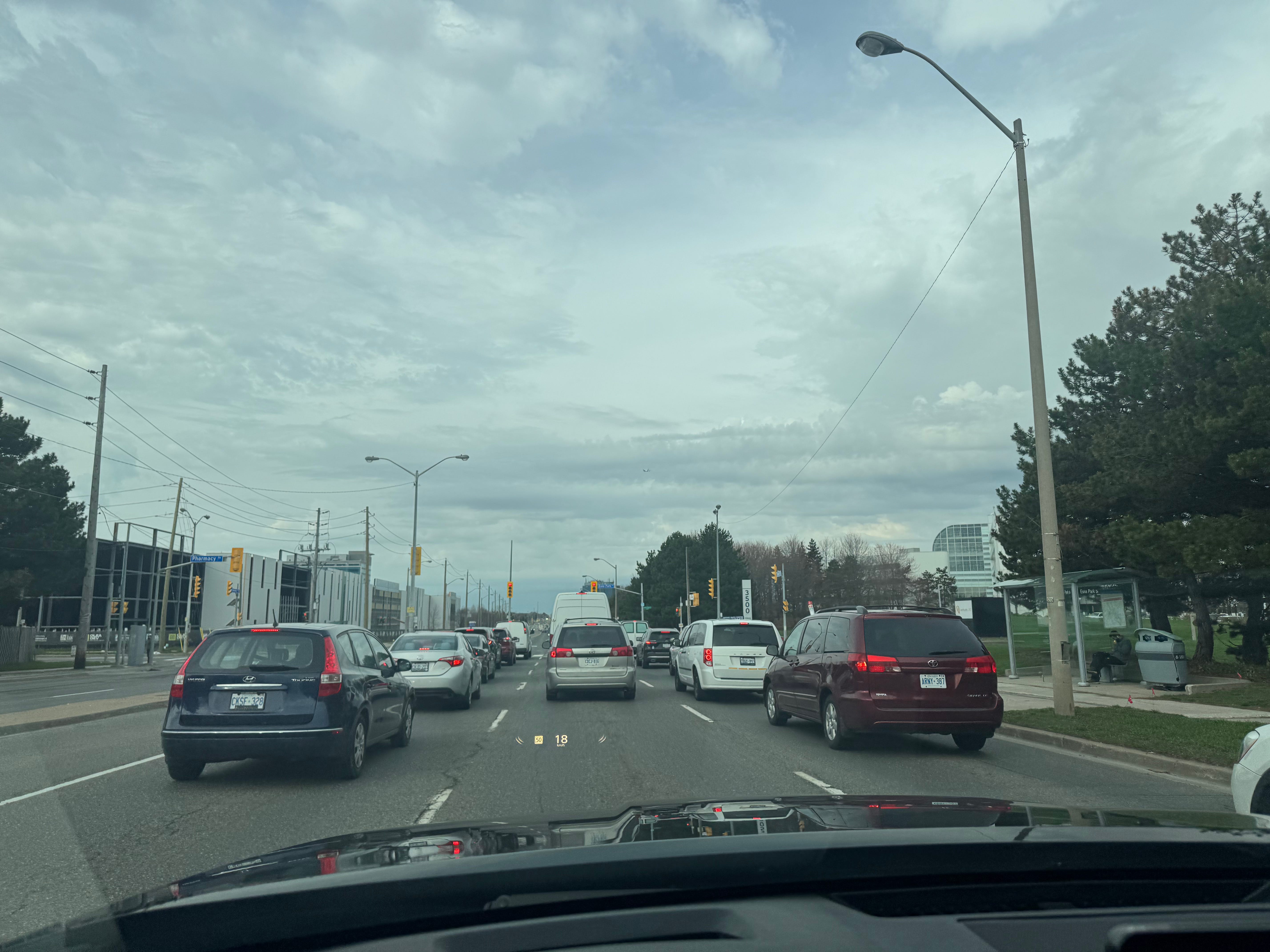
On the road side, it just seems obvious that much of our infrastructure needs a serious redesign.
The 401 uses up an absolutely enormous amount of land, but the space hungry collector-express system seems to mostly exist as a nice idea rather than a functional design. Meanwhile, the highway does not have any consistent HOV or transit lanes — or express lanes that are managed to keep congestion low and thus ensure that they are indeed truly express. We are also building enormous amounts of housing right along the 401, which is a public health issue given the pollution from the corridor, so there are questions to be asked about mitigating impacts, not to mention the simpler impact of just crossing the route if you're not in a car. Similar issues exist across the 400 series Highway Network in the GTHA, and the reality is that fixing these problems won't be cheap, but pricing does seem like an obvious part of the solution. In fact, American cities often seem to have found a good solution here with tolled express lanes that could fund all kinds of other road improvements — you would also have the benefit of a guaranteed fast trip if things were urgent or if you deemed it economically rational.
When it comes to local roads, designs are often antiquated and intersections could frequently be improved with contemporary features like roundabouts. And while I think that some additional grade-separated expressways makes sense, these ought to be tolled (at a rate that should obviously be much lower than Highway 407 — in no small part to indicate to the public that that's a possibility, and actually the norm in many places). This actually makes even more sense when you think about our roads increasingly as infrastructure for freight transport which is what they really should be, with space for trucks to layover and designs that minimize conflicts between trucks and personal vehicles. A big reason our highways are so problematic is that they have to be unreasonably large and wide in order to fit a traffic volume that is in large part driven by the fact that the cost of that infrastructure is not sufficiently reflected to the public. Anyways, with tolls and road improvements, I actually think the arguments are very easy — they just need to be made in a compelling way to the public and the result could be a road system that is much more functional, particularly for freight transport.
Urban roads particularly in the regional are also a major issue. The literal built reality is that there is not space to expand roads and if anything roads should probably get smaller if we want to move more people using public transportation and walking and cycling — which meets the objective of better transportation overall. Congestion pricing is the solution for drivers, and it would be the solution for drivers even without more bus and bike lanes. For paying a modest fee, drivers can have very high certainty that they will be able to go from place to place at a consistent speed; sure, they will trade off the ability to drive without paying an upfront fee, but that's the reality that creates things like travel times that can vary by two times depending on the particular conditions on a given day. As someone who has spent a lot of my life driving, I would compare it to parking in a busy area: If all the parking is free, it can often be basically impossible to find a space, and sometimes your left wondering if your vehicle is going to be towed away or just frustratingly circling for half an hour. Most people who understand that experience would happily pay a modest fee if they knew that it would alleviate that experience, and I think the issue with congestion is that we just haven't shown people that it works in the exact same way. A big reason you'll find extremely little free parking downtown is because parking only works if you can get it, and if people can't consistently get parking they just aren't going to travel to a certain area; roads aren't fundamentally different and people who can avoid driving extremely congested roads often will instead of being able to make entirely rational decisions about where they need to go and whether a certain road would help them.
Of course, another major impact of urban congestion is just for air quality, which we increasingly understand leads to cardiopulmonary issues as well as conditions such as asthma. London and European cities have really led the way on this, and if we're going to do congestion pricing, we should definitely adjust the price based on the emissions coming out of a vehicle. EVs should pay less than gas cars and smaller EVs should pay less than larger EVs; this not only incentivizes reducing traditional CO2 and brake dust but also tire wear, while also making parking easier and the roads safer. It seems pretty clear to me that not pricing many of these externalities is a big reason that EV adoption is slower in Canada than it is in Europe. Driver training and getting licensed should also just be harder, the reality is we live in a region where by no means is driving essential for most roles particularly in the city of Toronto. We seem to still educate drivers as if Toronto is a minor provincial city, drivers often don't seem to understand basic rules of the road much less the modern signs symbols and infrastructure that we increasingly install to make the roads safer for everyone. And while the idea of being more restrictive on driving might initially turn drivers off, the reality is that most drivers probably would like to see the bottom 10% of drivers by skill required to do much more training.
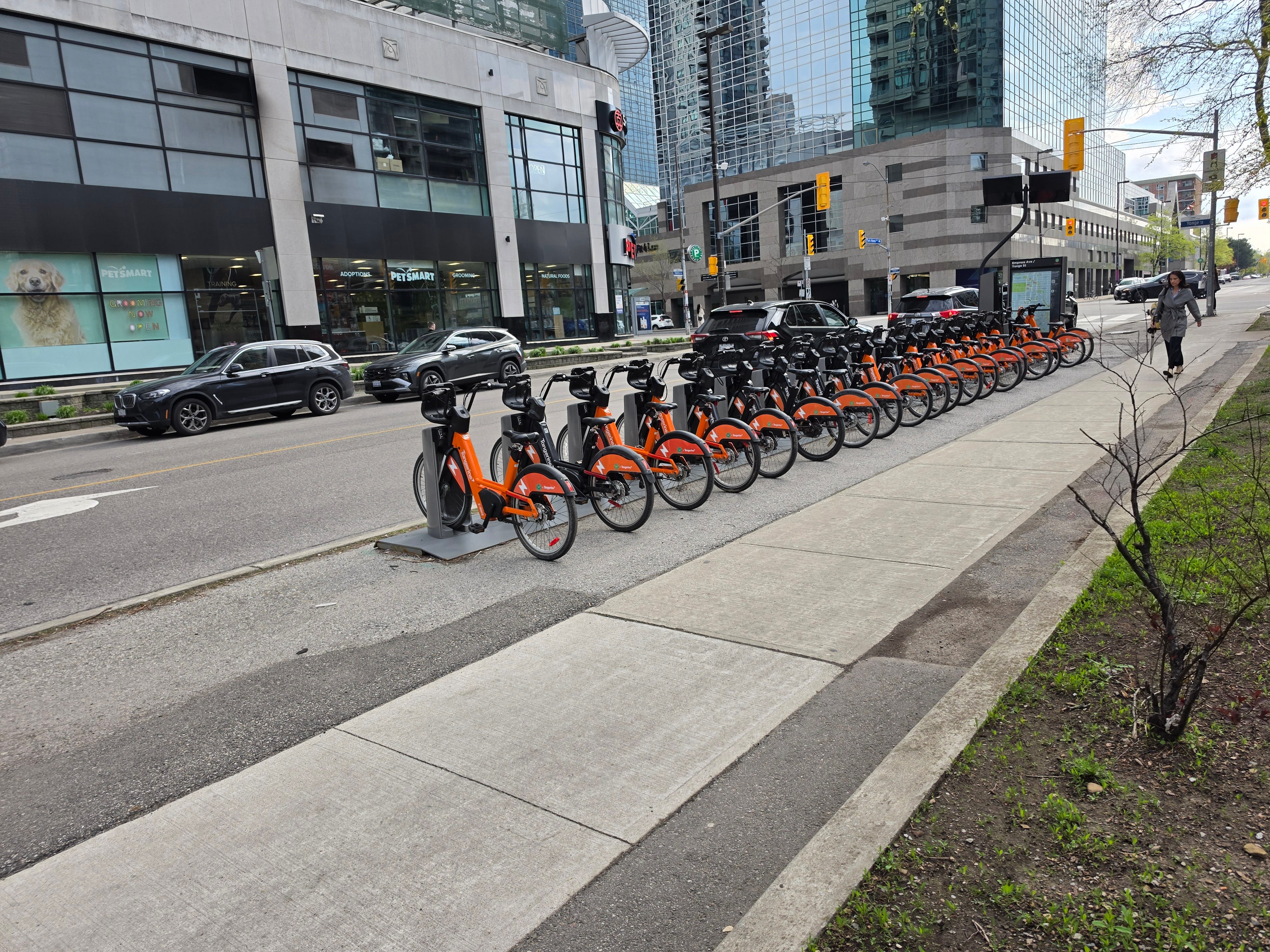
In many ways, the biggest lift is needed for active transportation. And the reality of active transportation actually should be politically simple.
In suburban areas, bike lanes are easy to fit in, and an urban areas they are just an obvious use of limited space. Drivers have to be reminded that they're just isn't enough space downtown for everyone who could drive or wants to drive to drive, and that no matter what we do, those who desire to use limited space will need to pay some price — either directly or in their time (a market system is preferable because it makes the cost more legible and easier to plan for). In suburban areas, fitting in bike paths along large streets shouldn't be a major issue, though where possible we should try to put bike paths off of major corridors if they can remain fairly direct so that people cycling are kept away from heavy traffic and breathing all of the exhaust and tire dust. Meanwhile in urban areas, we are mostly on the right track, but the provincial government needs to get out of the way and stop engaging in what is ultimately an illogical and counterproductive populist battle over the reality of limited space, and the most efficient ways for people to get around a dense area. Bike lanes might feel like a political lift, but the reality is that they actually skirt our biggest infrastructure problem which is punishing costs and timelines — because we actually know how to do them incredibly quickly and cheaply and how to make them nice over time.
A real missing link for bikes is that we haven't made storing them as painless as it should be. Locking your bike up on the street comes with a high risk of it being stolen, and while many buildings to offer some form of bike parking, they sometimes require people to schlep their bike through various doors or down an elevator, which is such an unpleasant experience that people just don't use it. Clearly, new developments should be encouraged to make cycle parking very good, and much like we do it with car parking and to a much greater degree we should build public bike parking locations where people can keep their wheels for a long time or just for a few hours. Making cycling downtown as seamless an experience as driving in the suburbs is part of how we make more people get on a bike which as I'll remind everyone frees up more road space for transit and drivers.
Improving the pedestrian experience is the other half of this point. To some extent, that means universal pedestrian sidewalks and walkways, but it also means things like shorter cycle times, multi-stage crossings, pedestrian bridges and pathways, and where possible protection from what are often harsh elements. In the suburbs, allowing people to walk through quieter side streets while still efficiently crossing arterials could seriously mitigate the dehumanizing experience of walking along a pseudo-highway, while downtown we just have to have an honest conversation about how we allocate space. For example, on a street like Yonge, it seems we're waiting far too long to give the pedestrians that far outnumbered cars adequate space (and this is painfully obvious to anyone who isn't being intentionally obtuse by simply walking down the sidewalks of Yonge Street on a pleasant afternoon and frequently being forced into the roadway because the sidewalk is narrow and used not only for pedestrians but also for street furniture and utilities among other things). Having any system whether it be roads or sidewalks at 120% capacity guarantees that that system doesn't function the way it should, but the solutions are not always the same, we can afford more space for those walking because walking doesn't take much space, pricing tools are the obvious solution for roads because real estate in the GTA is obviously incredibly expensive! It's also clear that we should have more pedestrian-only streets (more is used generously here because we almost have none at the moment); pedestrian-exclusive streets would be a boon for retail and all kinds of other businesses, but are also seen (including by destination Toronto) as a potential huge draw to our city — perhaps so that other North Americans can see that they too can have cities that make movement effortless. Of course, having a number of very nice dedicated pedestrian streets would also probably lighten the load on some streets with sidewalks that would otherwise be too narrow to handle demand, effectively moving demand around in the same way that something like congestion pricing moves car traffic around.
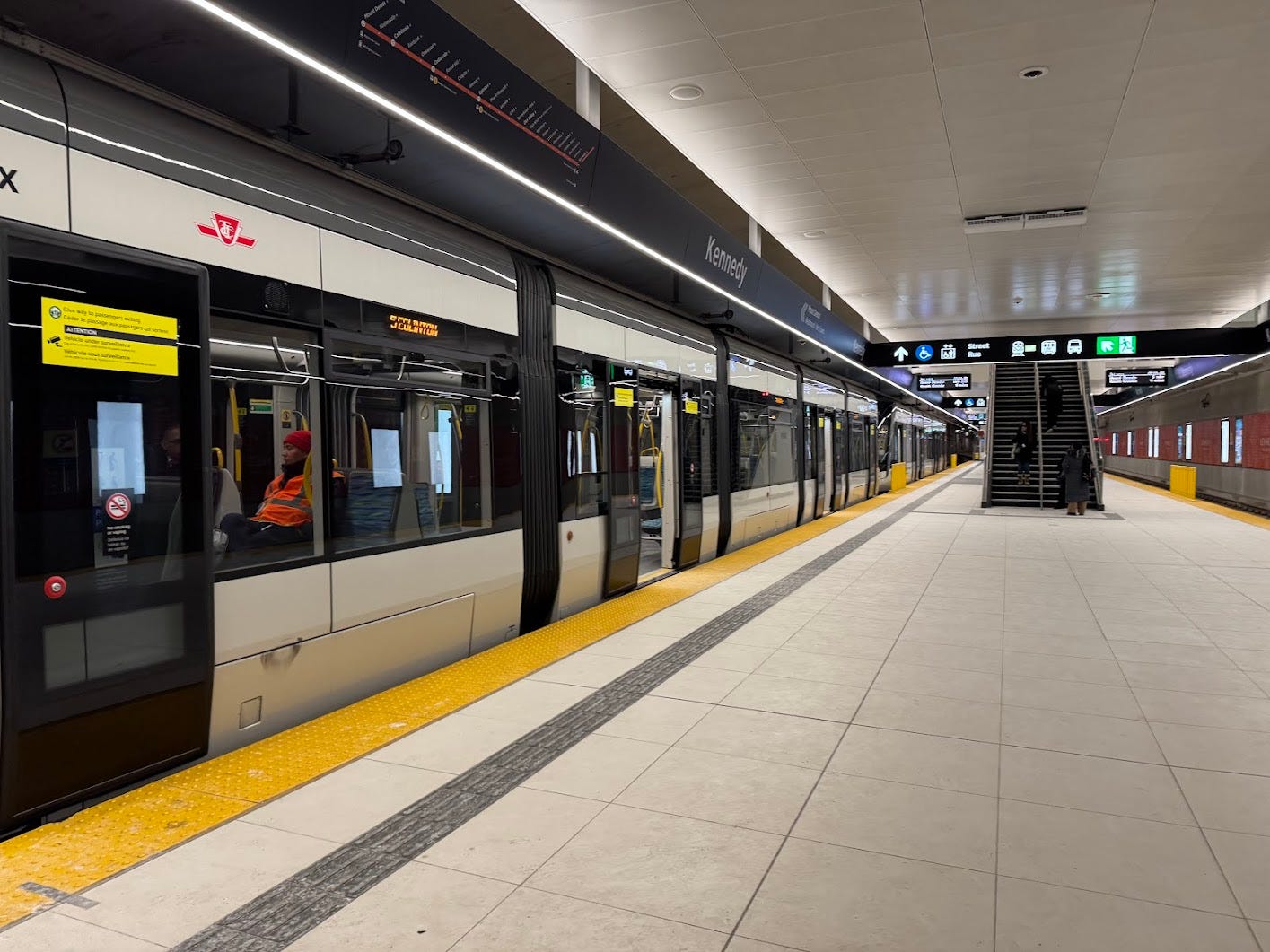
Public transit is obviously my area of greatest interest, and to some extent, the solution here is to expand the level of service available in suburban Toronto to the entire region. But in doing that. we should also make improvements. Right now the City of Toronto wastes a lot of resources by just throwing buses at major suburban streets without diligently managing them; if headways and service with more-carefully monitored and less buses would be required to provide the same excellent service frequency. Of course, frequency isn't everything even if it is probably the most important thing — suburban buses are often slow because they stop far too often. Queue jumps and opportunistic bus lanes should also exist virtually everywhere and would help speed things up. Bus shelters should be omnipresent and should provide not only protection from the snow and rain but also the sun. Bus vehicles should be nice and modern and buying at least some of them from Europe would probably create a real incentive for everyone to up their game.
The streetcars and modern trams we've built across the region also need a complete overhaul which to some extent is frustrating given the modern trams are, well … brand new. Like with the buses, the vehicles should probably be about 30% nicer. But we should also look at standardizing stops at a wider spacing, operating vehicles more aggressively to shorten trip times, improving signal priority, and having the Europeans who consistently operate very reliable and quick street railways audit our systems and suggest road and rail redesigns. Done well, all of this infrastructure should be a huge boon for the region particularly in the urban core where all kinds of connectivity between dense development, public spaces, and then other modes of transportation can be enabled by the streetcar network. More major rethinks like the King Street project should be executed to both enhance active transportation and public transportation on key urban corridors. There should also probably be — if not overwhelming — strategic expansion of the street railway systems for example extending the Finch light rail to Pearson, the Hurontario light rail to the Mississauga waterfront, and the Toronto streetcar network to all kinds of neighbourhoods on the edges of the urban core.
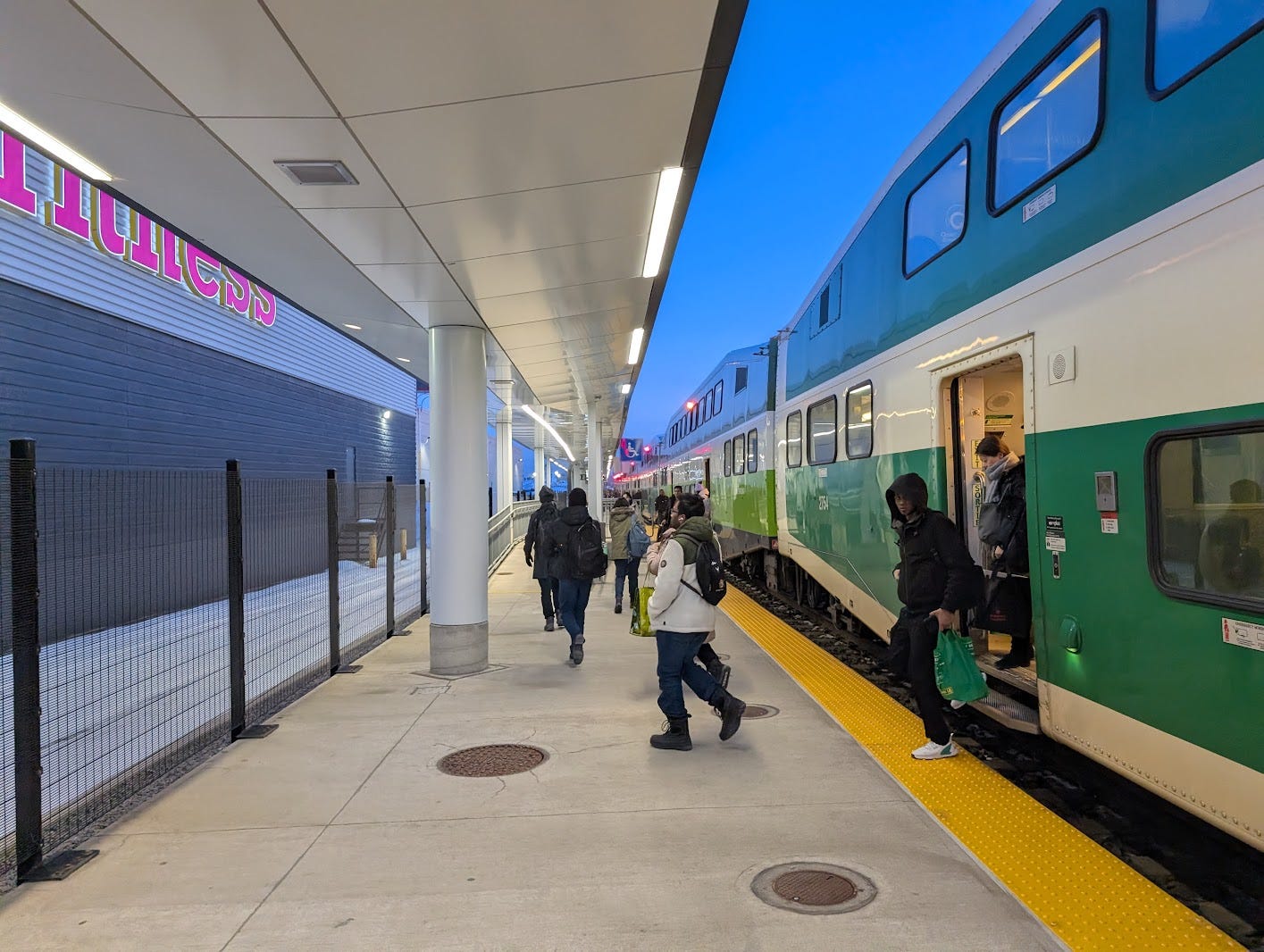
Rail rapid transit, whether that be in the form of subway, or regional rail needs to be a major focus, because while buses are almost universally available across the region, they simply do not have the capacity, economics or pure speed offered by rail rapid transit — which more or less acts as the highways of the public transport system.
Before we even think of massive expansion to the network (and after all this is already happening) we really need to just operate our system better. The subway should have screen doors at the very least at the busiest stops, as well as modern systems, and higher levels of more reliable service. It's easy to go and look at the world's best subway systems and generate a list of things that we could and should do better. The regional rail network requires an even bigger lift but with even more potential payoff. The bones of the system are actually pretty nice but service levels are just far too low. Within the contiguous built-up urban area there's no reason GO trains should not have a default off-peak frequency of every 7 minutes or so, and I think the inevitable ridership and development changes that would happen from that level of service would take us on a path to even higher levels in the future. Electrification is not a nice environmental initiative but inevitable requirement for operating this level of service reliably. Beyond the core GTA, there's no reason that trains shouldn't run every half hour, and for major destinations like Hamilton, Kitchener-Waterloo, and Niagara, there's no reason you shouldn't be able to just show up to a station and get on the way in 15 minutes. Across all rail transport stations should constantly be up for improved accessibility weather protection and amenities and we need to better match these improvements to actual use. No station should be barren and miserable but it isn't a good use of resources to make very lightly used stations Cathedral-like.
Expanding the rail network is probably the biggest lift of anything I'm proposing here. To a large extent, a major expansion requires us to address our longstanding cost problems which mean that we build infrastructure for large multiples what it is built for in other developed countries. While this isn't a detailed plan of every policy we should enact and piece of infrastructure we should build, it seems clear that an East-West route across the north of Toronto, as well as a route from the north of Toronto to communities like Oakville and Burlington via Pearson airport (Pearson Airport should clearly be much more connected to transit, especially given it central location, though modes and exact designs are up for debate) are obvious. We should also probably build more rail to the core of the city so that dense communities are always near rapid transit, while also upgrading our busiest bus corridors. It's also the case that we should always be watching planning projects like the Ontario line that simultaneously address urban growth and congestion. To some extent, our next major round of urban rail projects should respond to new traffic flows from our last round, as well as new dense urban communities.
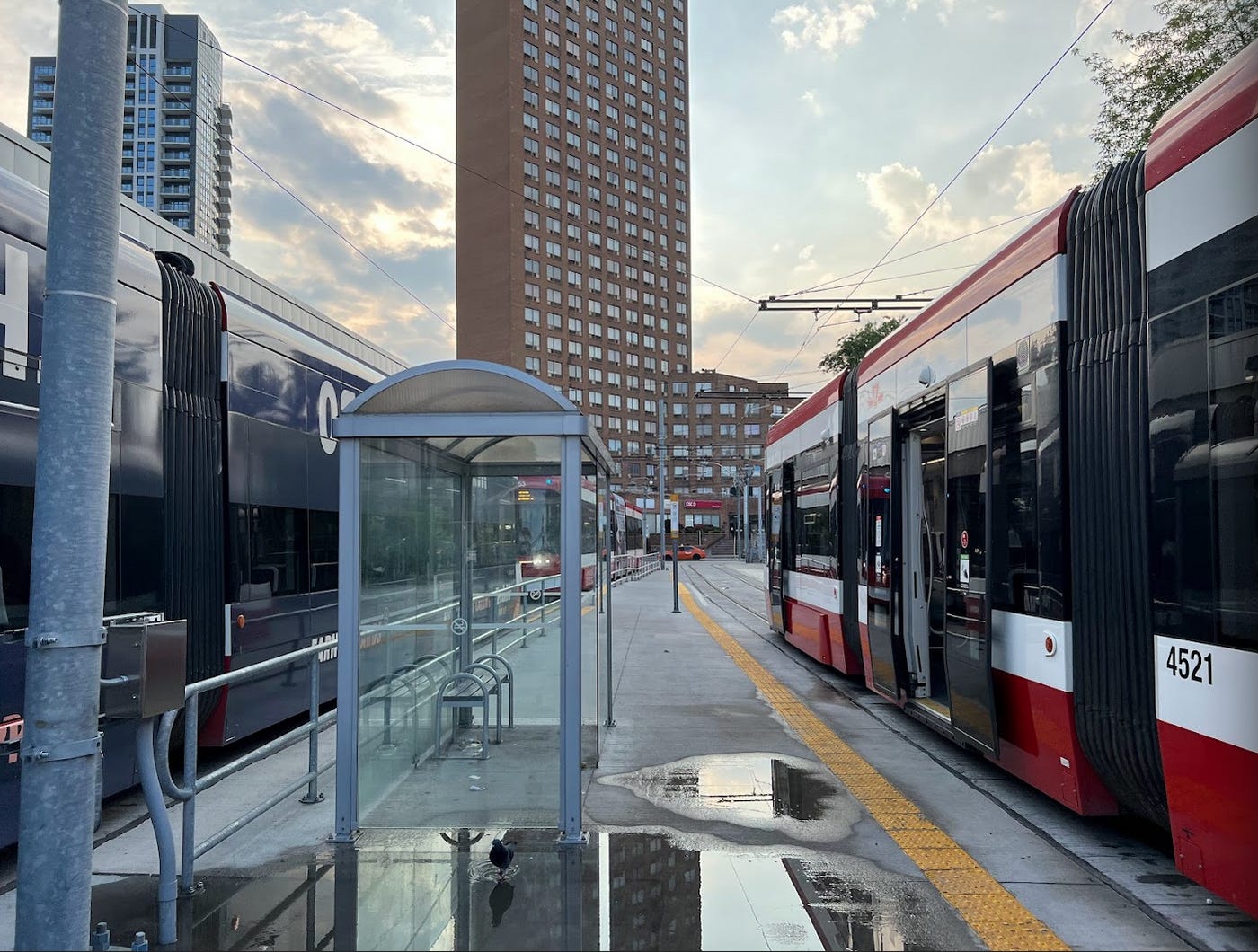
We also need to change the way we run our transit system. Delays and disruptions should be clearly communicated, and with a better network they will be less frequent and painful. The interfaces by which the public interacts with the transit system should also just be better: there's no good reason that a grocery store should have a better website or customer service or wayfinding signs than a public transit system. The fare structure also needs to be modernized: transit should always remain accessible to those on stretched incomes, but the reality that it remains far more affordable than the widely-adopted alternative of driving should be kept in mind when setting fares. The current hodgepodge system of different fares and operations in each city clearly needs to be tossed in the bin even if only from a public-facing perspective (bus operations could still be operated by municipal organizations even if the actual routes paid no mind to municipal boundaries), fares like virtually all transportation costs should reflect that more time and distance incurs more cost to the operator of a service — something which would also encourage compactness by reminding people of the cost of distance.
Ultimately, if our transportation system is to be among the best in the world all transport modes should be functional and allow people to go virtually anywhere in the region (this is already achieved for the car and to a lesser extent by transit) but different areas should obviously be tuned for different types of transport, when downtown drivers shouldn't expect to be able to move quickly and park easily without paying — and in fact, even identifying people by the mode of transport they prefer makes a little sense, in the ideal organization people simply take the mode of transport that makes sense. To a large extent, because we don't have cultural battles over them, cyclists and transit users already have to accept many of the the inherent limitations of these modes of transportation.
Intelligently combining transportation modes should allow people to move quickly almost anywhere, but not for free and that doesn't just apply to driving but also transit. We need to remind people that a better transportation system isn't free, but that it is a great value.
Is all of this doable in 20 years? I think much of it is doable in just a decade. To a large extent, pedestrian and cycling improvements can be made in a scrappy manner and then hardened as part of the normal infrastructure rebuilding cycle. More parking and new pedestrian bridges plazas and spaces aren't projects measured in decades.
Road improvements are likely to take longer, but even massive projects can be done in less than a decade. If we were to spend a few years planning aggressively, and a decade implementing, even at our current slow and unrefined construction pace we could make all the transformative changes without a problem in 20 years. Many changes like road pricing, improved driver training, improved the local roads, new lite-expressways, and facilities for trucks could be implemented even faster. Of course you're not going to rebuild every intersection or retrain every driver in 20 years, but I think people would be surprised what a large percentage could be done and how noticeable the impact would be.
Completely overhauling transit operations is a project that could be completed in 5 years, some things like more minor infrastructure improvements like screen doors and better switches on the streetcars would take longer and would probably be rolled out slowly tackling the biggest problem areas first not unlike various road or cycling improvements. Major transit projects are definitely the longest timeline thing in this vision, but even those should have no problem being completed in less than a decade if we work hard to improve our construction management and design for cost effectiveness. We are actually running a ton of transit projects in parallel right now, and it seems plausible to me that in the next 20 years we actually do less major projects, perhaps just continuing apace with improving the regional train system, and doing two very large rapid transit projects.
The reality across the board is that this need not cost very much. Road improvements could largely be funded by new road pricing, with the grand deal for drivers being that they might sometimes have the option to pay and by accepting that option they would get a lot of road improvements. Congestion pricing and slightly-higher fares could put a huge dent in improving transit infrastructure and service. But it's important to remember if it's so many of the improvements I'm proposing here really aren't that new cost but different philosophies and allocations for funding.
Of course, you can't comprehensively reconstruct the entire transportation system of the GTA in the next two decades. But what matters for people is trajectory. If every other bus stop is suddenly much nicer, the subway stations you actually use have screen doors, and major road work is occurring all across the region — people will understand the benefits and more importantly see the trajectory that we would now be on, to fit in a class of cities that we currently can barely imagine being named alongside.
Doug Ford made clear one of the obvious problems in understanding around active transportation recently, (kind of like he and his brother around streetcar 15 or so years ago- and it getting in the way, when it carried 3 times as many people). Yes, the outer reaches of the bike lanes were relatively empty, but the question that was not examined, where the actual flow limit for cars was experienced, did bikes move more people per meter of road space, than the cars that space would be created for, would in their space. A bike lane can look very empty and still carry more people as two very full lanes for cars, and what matters is the point where the bottleneck is actually experienced. Drive anywhere on a highway, and you will discover often the cause of you being at a stop is actually many km ahead of where you actually are at the time.
Toronto should be looking at creating and using 1 way streets to permit the creation of dedicated lanes for Streetcars and bikes. Having a streetcar going east on one street, west on another, in a dedicated lane, should be something that is seen as natural, not something that is only considered when we need to do diversions. Further it should not be hard to ban (and effectively block) turns across the tracks on those streets, and having the lane between the car and the sidewalk for bikes (bikes directional flow as streetcars) with the transit facing side of the lane, also used for platforms. If this was just done, Bathurst to Cherry, on Adelaide and Richmond, would it not provide a space for bikes and streetcars to flow swiftly through the slowest portion of core? Other side of Don, look at changes to Eastern and Queen, to allow design and speed? Use improved streetcar and well protected bike lanes - as part of the anchor for substantial development? Side note, one way street should also be easier to create support for improved signals timing and transit priority for streetcars. This for cyclists should also mean a greater chance of a smoother ride, flowing along with a streetcar, which even if it gets all the lights, stops every 500-700 meters would still make keeping up easy, as exceeding an average of 20 km/h for the streetcar would likely be met with Leaf's winning the cup type of jubilence .
Minor changes to design, would provide vastly improved movement and safety for cyclists, and transit users, while likely also improving the flow of traffic generally, as it would likely move more people to alternate modes than it would remove capacity for cars, through the critical bottleneck spaces.
I would note, the city has major holdings in parking, and while only about 15% of lots have attendants, sheds close to a lot attendant, would be a quick way to provide some secure bike parking in core, very few spaces would provide spaces for a lot of bikes.
I think the hardest part here is getting both decision makers and average voters in Canada to branch out in terms of where in the world to learn from. If/when that happens, the rest will be easier.